
End Date : May 13 2026 08:00 PM
We may have sold this bottle before. Click the graph below to view our sales history.


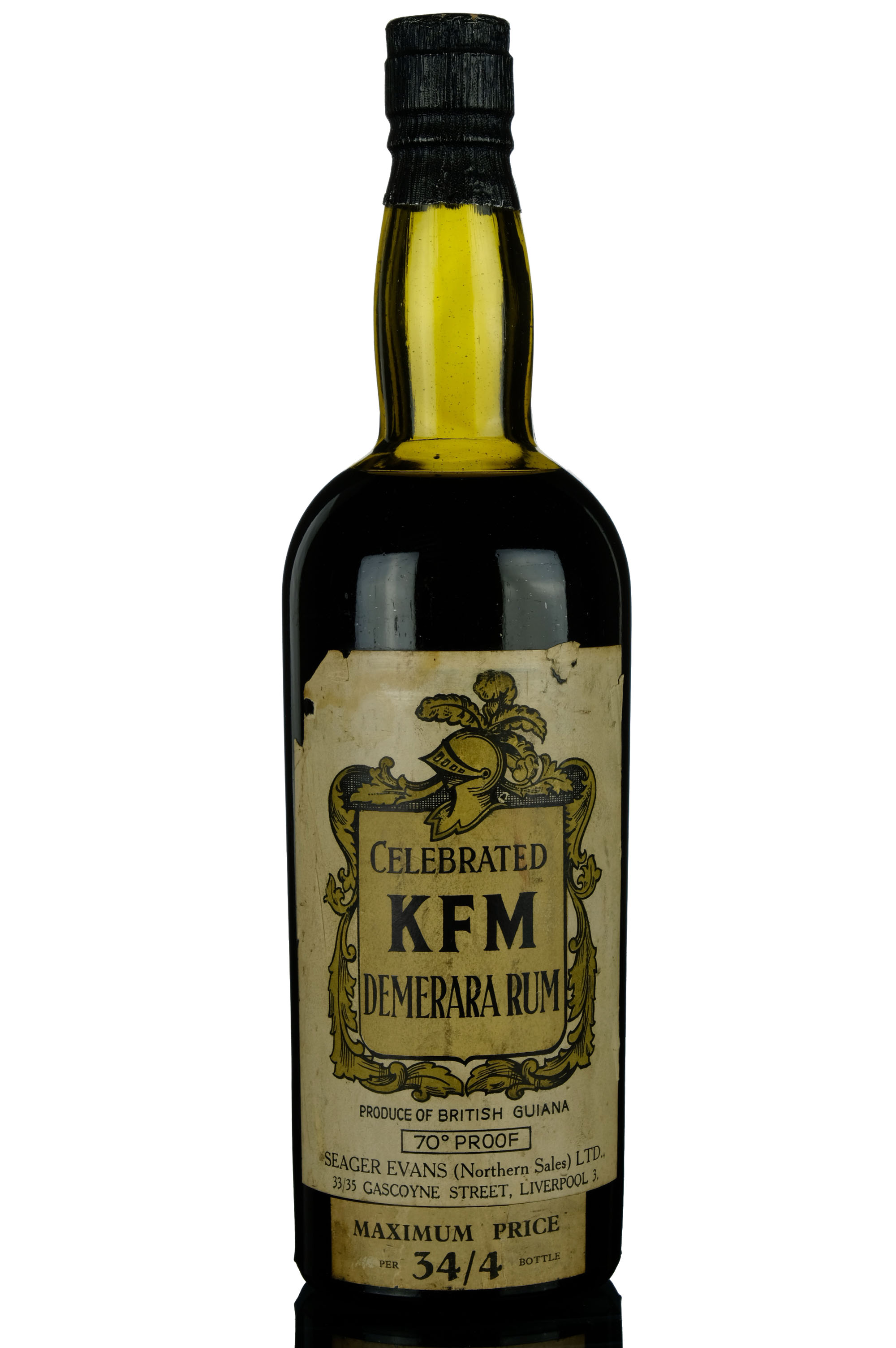
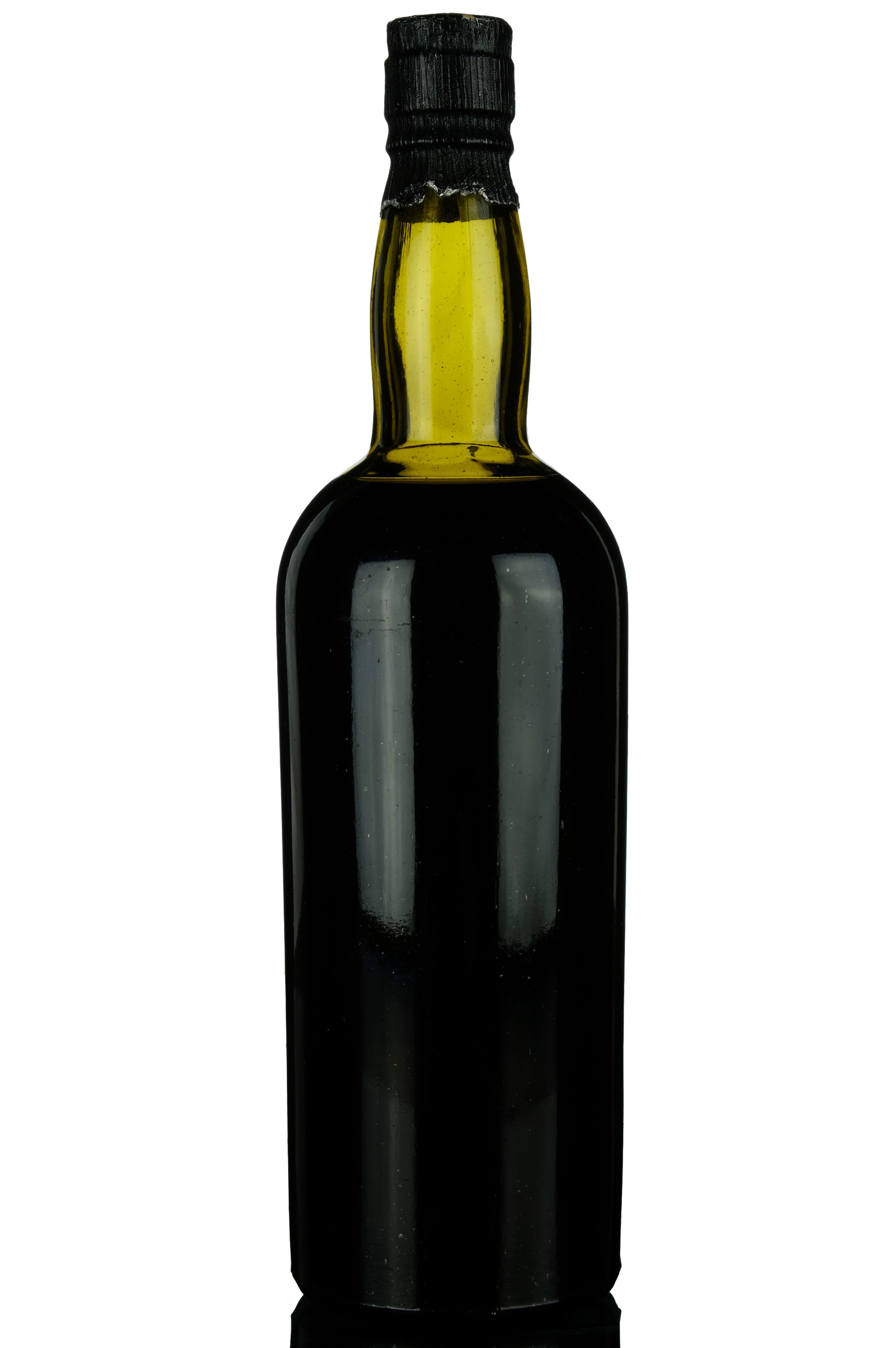
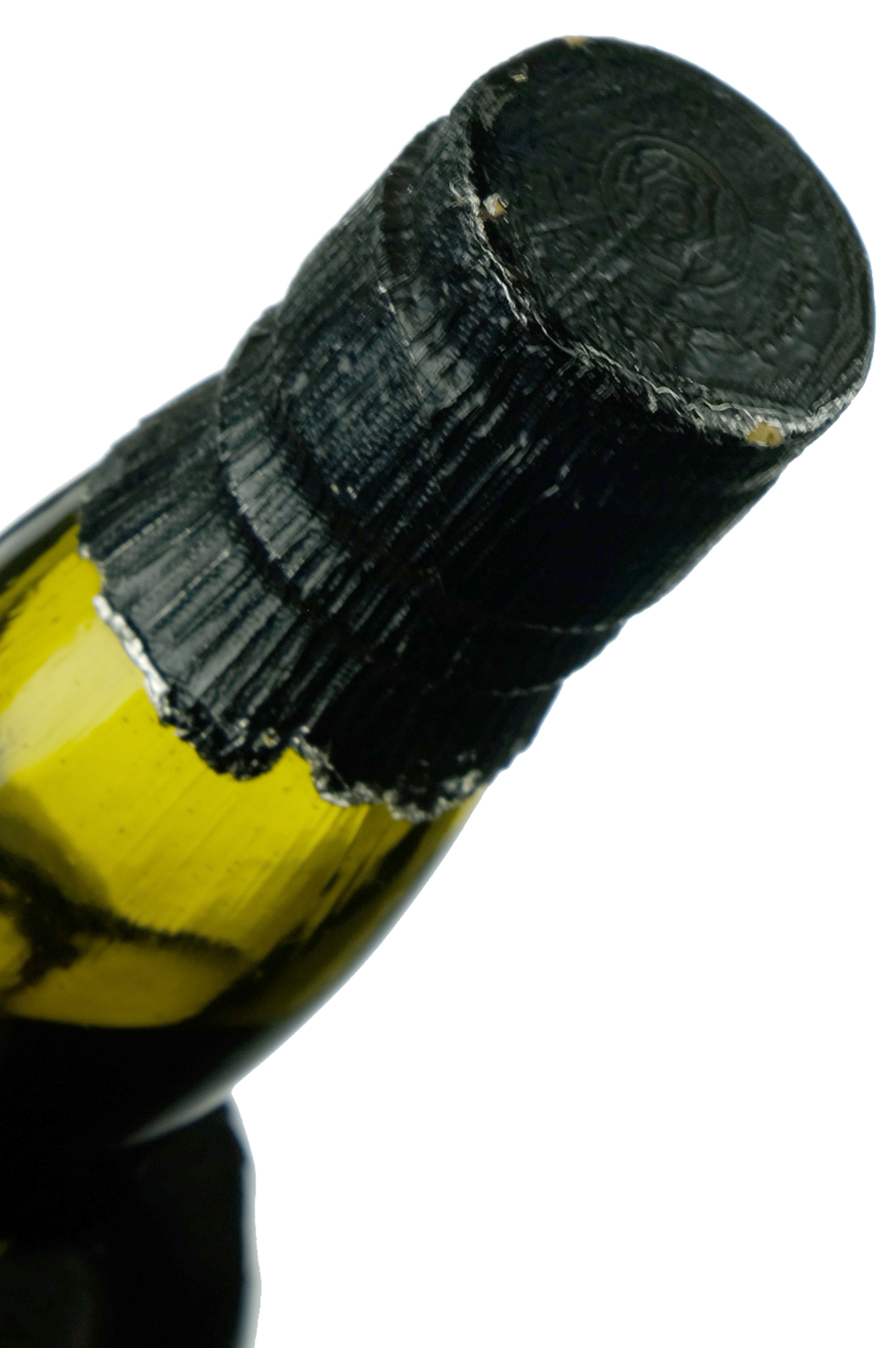
KFM Celebrated Demerara Rum.Bottled 1940s. Two part moulded glass. Stopper cork with foil seal. Produce Of British Guiana. Seager Evans (Northern Sales) Ltd. 33/35 Gascoyne Street, Liverpool 3. Bottom label indicates Maximum Price 34/4 which is 34 shillings and 4 pence (£1.72 in todays money). No size stated although equal to full size bottle. 70 Proof. No box.
Seager Evans was founded in London in 1805 as a partnership between James Lys Seager and William Evans, with early operations based at the Millbank Distillery on the River Thames.
During the 19th century, Seager Evans became a recognised name in the gin trade, joining the Rectifiers’ Club in 1832 alongside Gordon's and Tanqueray. Following the passing of William Evans in 1856, leadership eventually passed to Sir Frederick Seager Hunt, and the business was converted into a limited company in 1898.
In the 20th century, production moved to Deptford in 1922, and the company successfully expanded its portfolio beyond gin into whisky and international markets.
Whisky-Online Auctions is a public auction for collectible spirits. Lots are offered for sale in their existing condition and bidders are expected to satisfy themselves as to the condition, authenticity, description and suitability of any Lot before placing a bid.
Although a condition report is normally included within the Lot description, prospective bidders are strongly encouraged to inspect Lots in person prior to bidding. If this is not possible and further information is required, bidders should use the "Ask A Question" facility to request clarification or a more detailed condition report before bidding.
All Lots are sold strictly "as seen" and "as described". Any condition report, commentary, dating estimate, provenance information or opinion provided by Whisky-Online Auctions is offered in good faith and represents our assessment at the time of cataloguing. Such information should not be considered a guarantee or warranty.
Whisky-Online Auctions reserves the right to amend, correct, supplement or clarify any catalogue description, image or other Lot information, and to withdraw, combine or divide Lots, at any time prior to the conclusion of the auction. Bidders are responsible for reviewing the final Lot description and any updates issued before bidding.
Due to the age and nature of collectible spirits, natural deterioration may occur over time, including evaporation, ullage, leakage, cork deterioration, capsule degradation, label wear and oxidation. The condition of the liquid, closure, seal and packaging is entirely at the buyer's discretion and risk. Whisky-Online Auctions makes no warranty as to the drinkability, taste, quality or suitability for consumption of any Lot.
All bottles are inspected prior to sale and, unless otherwise stated, are sealed. However, Whisky-Online Auctions cannot guarantee the integrity of any cork, seal, stopper or closure.
Images form part of the description and depict the actual Lot being offered. Where visible, fill levels will be shown in the images and/or description. If the filling level is impossible to determine, such as with ceramics decanters, we will provide an overall weight of the decanter in KG. Information relating to bottle age, bottling period, vintage, provenance, rarity and historical background is provided to the best of our knowledge based on available research and industry experience. Any date or bottling period assigned to a Lot represents our opinion at the time of cataloguing and should not be considered a guarantee or warranty.
Any questions relating to condition, authenticity, provenance, fill level, dating or packaging must be raised before bidding. Questions or concerns raised after a bid has been placed, after the auction has ended, or after a Lot has been won will not constitute grounds for cancelling a bid, refusing payment or disputing the sale.
By placing a bid, bidders confirm that they have reviewed the description and images, sought any additional information they require, and are satisfied with the Lot. All sales are final except where required otherwise by law or under the Whisky-Online Auctions Terms and Conditions.
| BID | DATE | TIME | |
|---|---|---|---|
| £525.00 | 13th May 2026 | 07:41 PM | |

No Product Found
By placing a bid, you confirm that you have read, understood and agree to be bound by Whisky-Online Auctions' Terms and Conditions of Sale.
You acknowledge that your bid is binding and irrevocable.
If you are the successful bidder, a legally binding contract for the purchase of the Lot will be formed in accordance with the Terms and Conditions. You agree to pay the hammer price together with the Buyer's Premium, any applicable VAT and all other charges payable under those Terms, including delivery charges where applicable.
By bidding, you confirm that you are authorised to place the bid, are acting on your own behalf or have full authority to act on behalf of another person or entity, and have the financial means to complete the purchase if your bid is successful.
No Product Found
By placing a bid, you confirm that you have read, understood and agree to be bound by Whisky-Online Auctions' Terms and Conditions of Sale.
You acknowledge that your bid is binding and irrevocable.
If you are the successful bidder, a legally binding contract for the purchase of the Lot will be formed in accordance with the Terms and Conditions. You agree to pay the hammer price together with the Buyer's Premium, any applicable VAT and all other charges payable under those Terms, including delivery charges where applicable.
By bidding, you confirm that you are authorised to place the bid, are acting on your own behalf or have full authority to act on behalf of another person or entity, and have the financial means to complete the purchase if your bid is successful.