

Total Lots Sold:
26
View Lots
Do you have this bottle for sale?
SELL IT TODAYHAMMER PRICE OVER TIME
This graph displays data solely from Whisky-Online Auctions past sales history. Please note the filling level of the liquid and the condition of an item can affect the price negatively, so please check individual Lot sales below if there's a sudden dip in the graph.
HAVE ONE FOR SALE?
Submit your details along with an image and a description of your bottle. We'll then be in touch with the best way to proceed.
WHY SELL WITH WHISKY-ONLINE AUCTIONS?
0% Sellers Commission
Free Collections Available
Over 30 Years In The Whisky Industry
Over 1,700 Five Star Trustpilot Reviews
We Sell The Rarest Whiskies Ever Bottled
Global Buying Audience Including Far East Buyers
Bespoke Auction Platform
Thousands Of Active Bidders
Large Database Of Newsletter Subscribers
Over 36k Social Media Followers
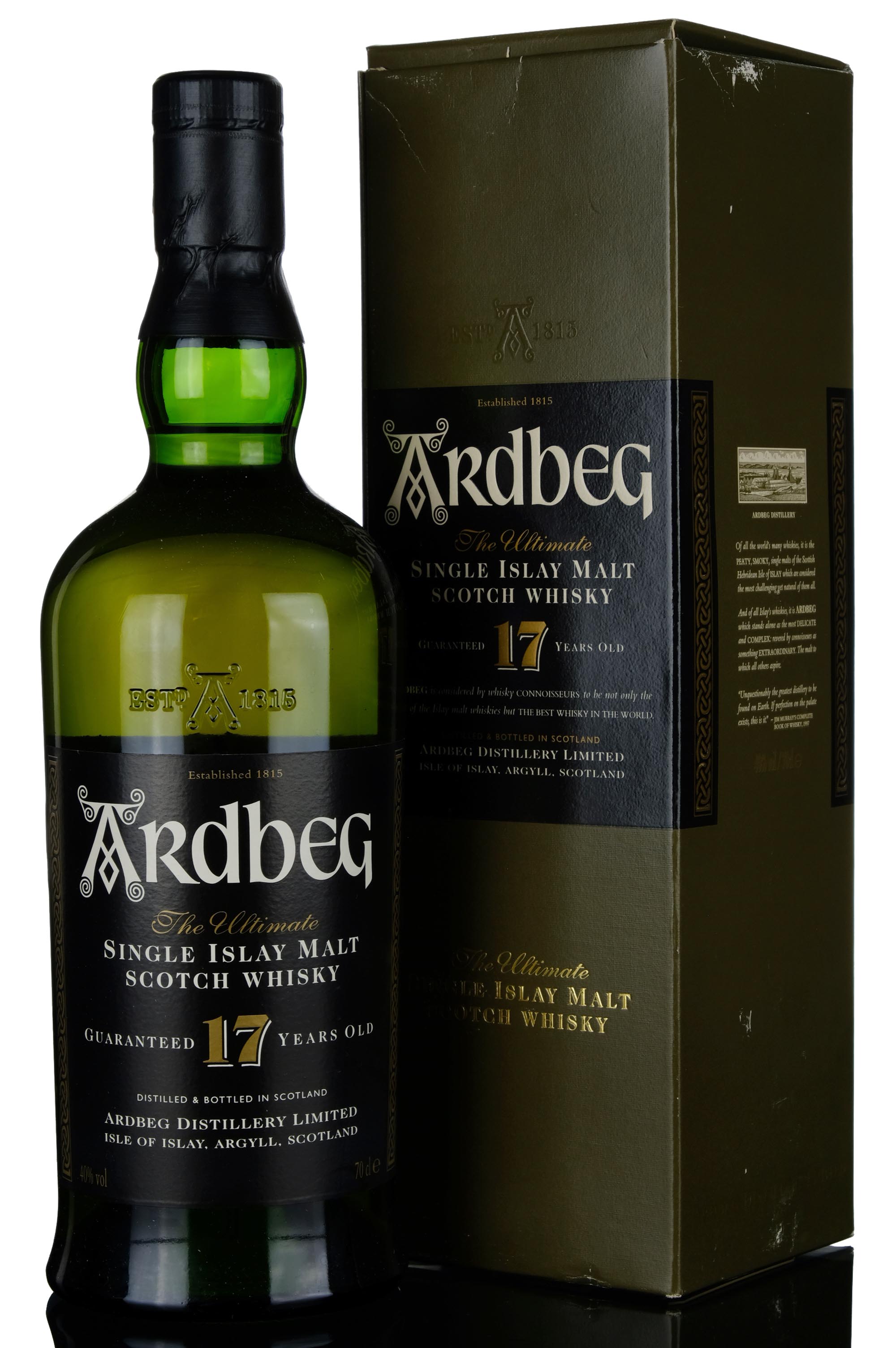
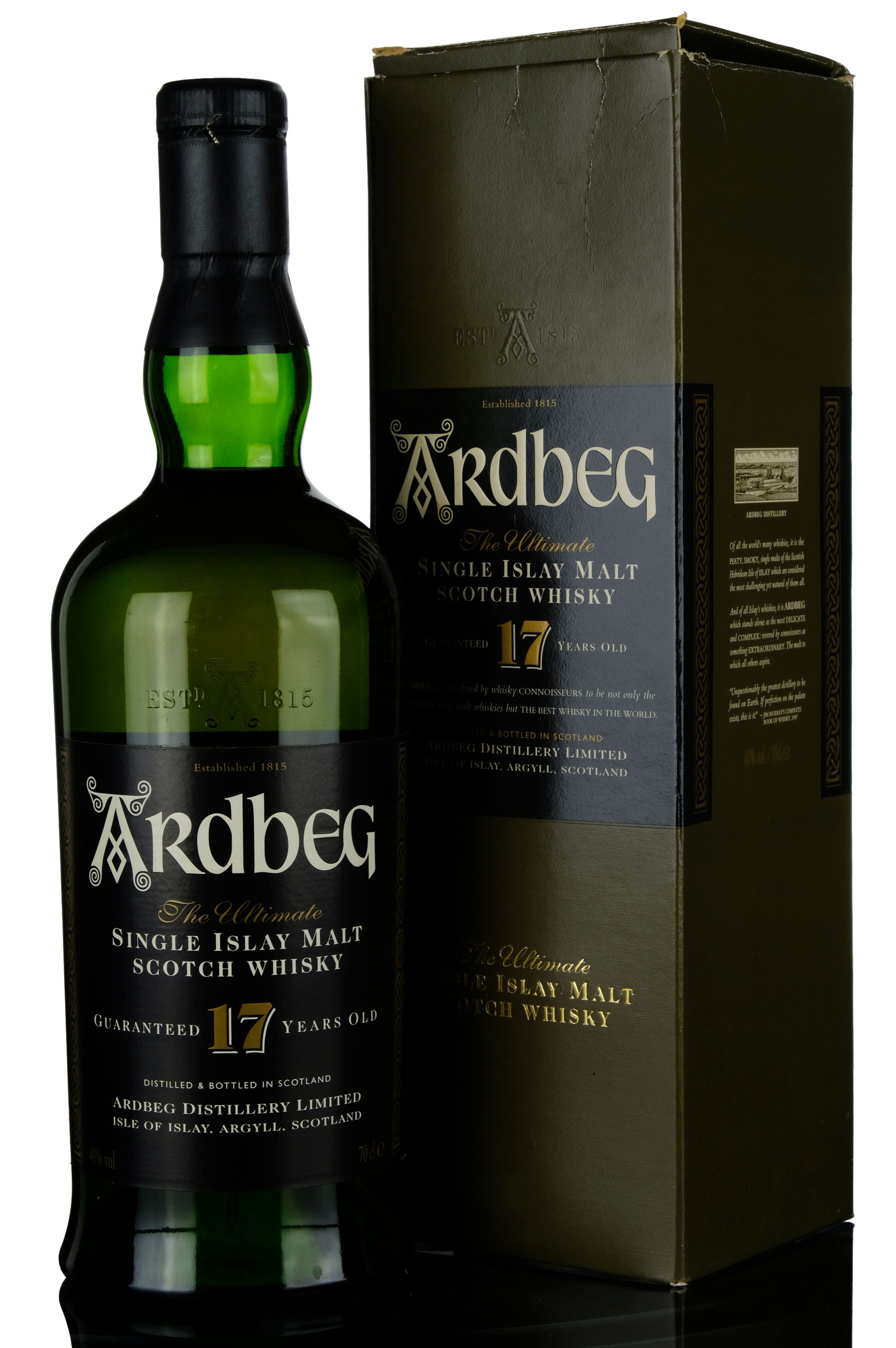
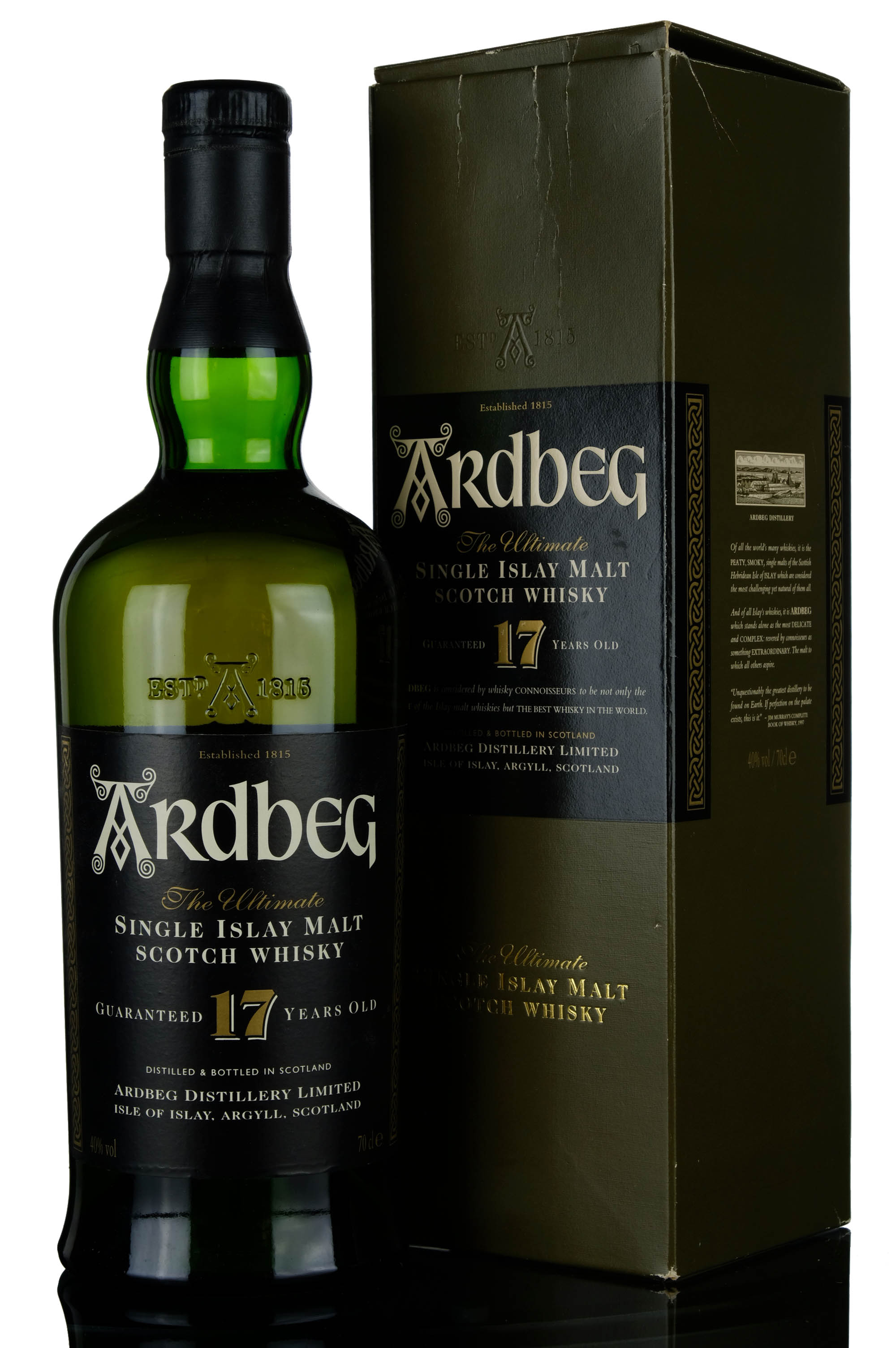
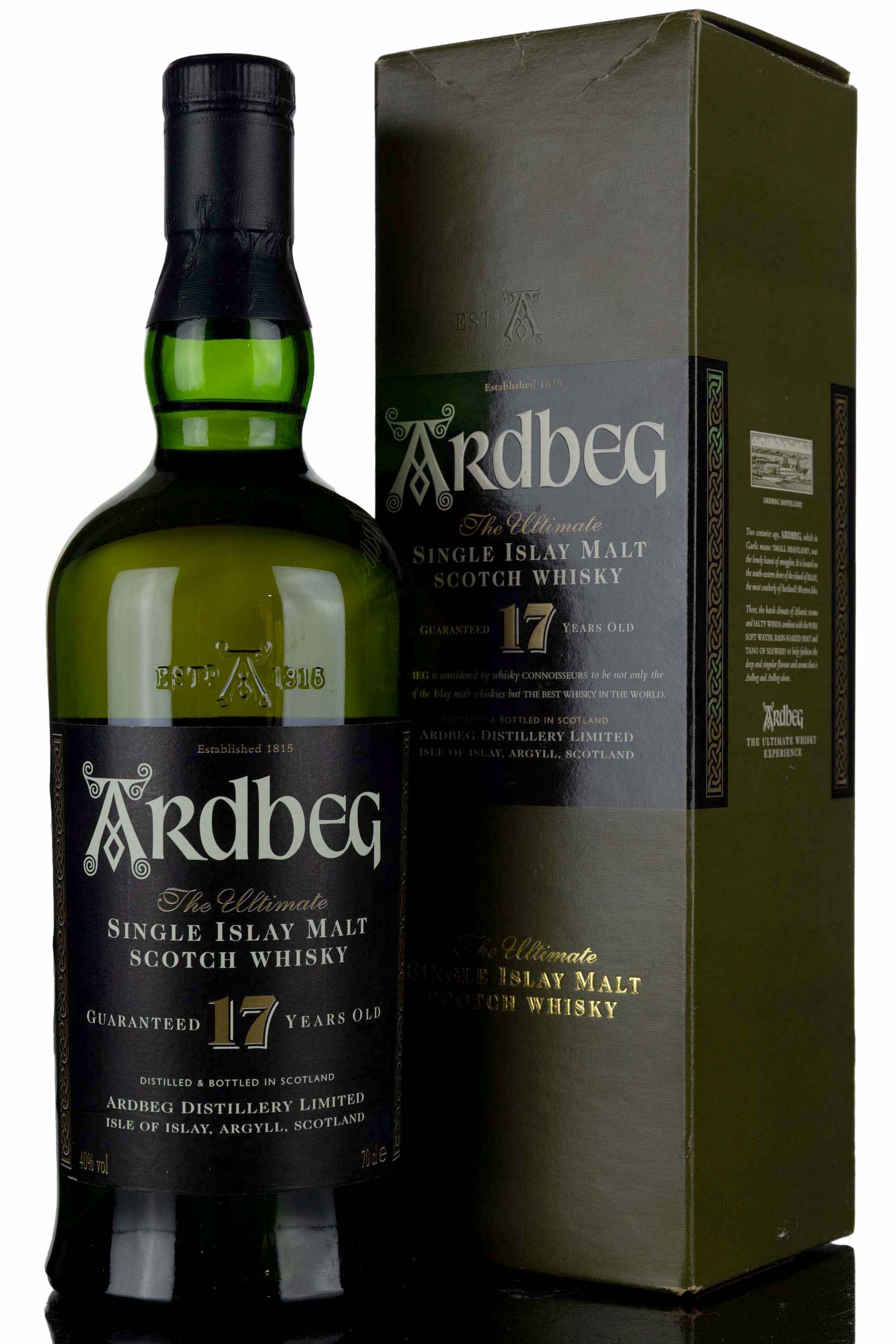
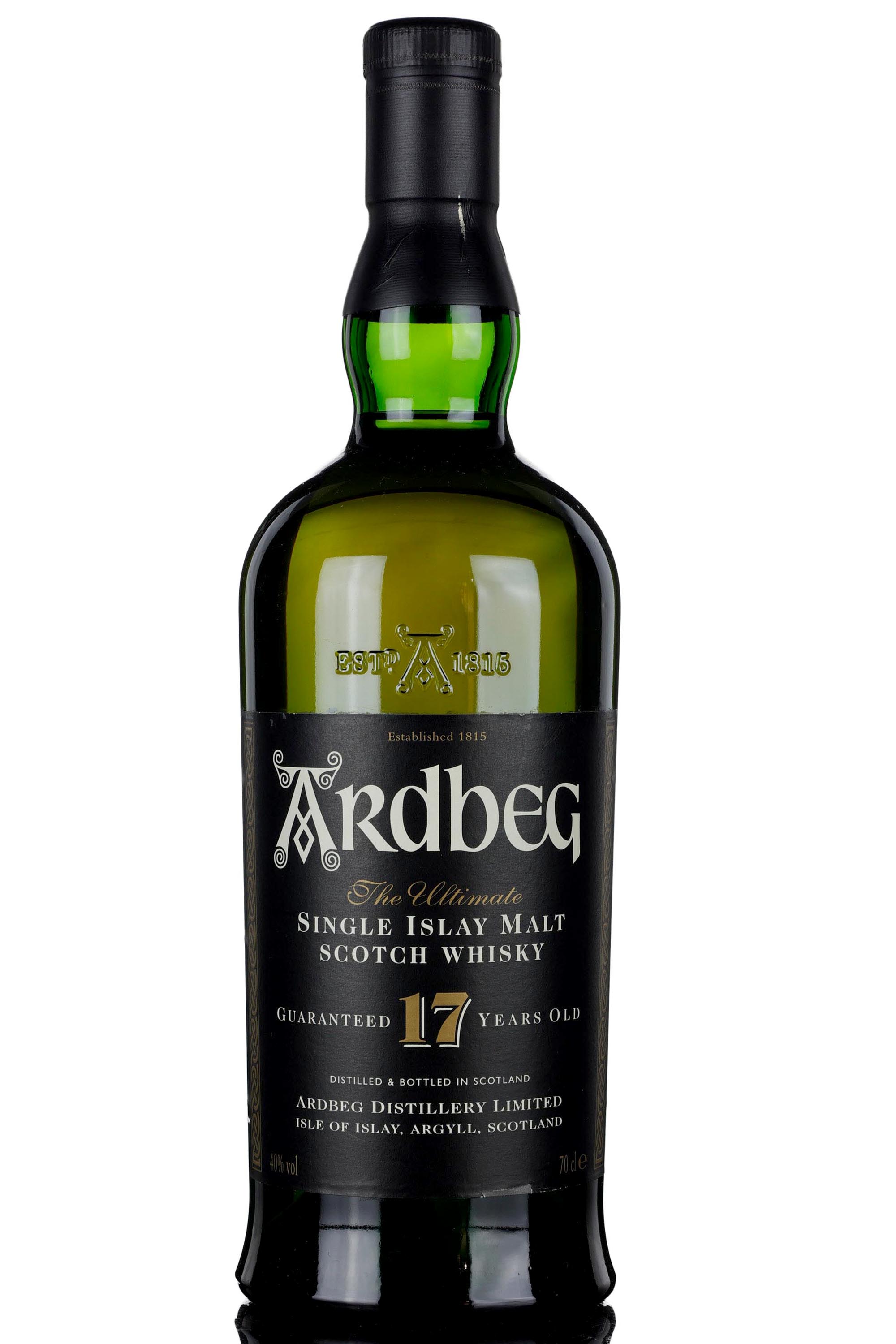
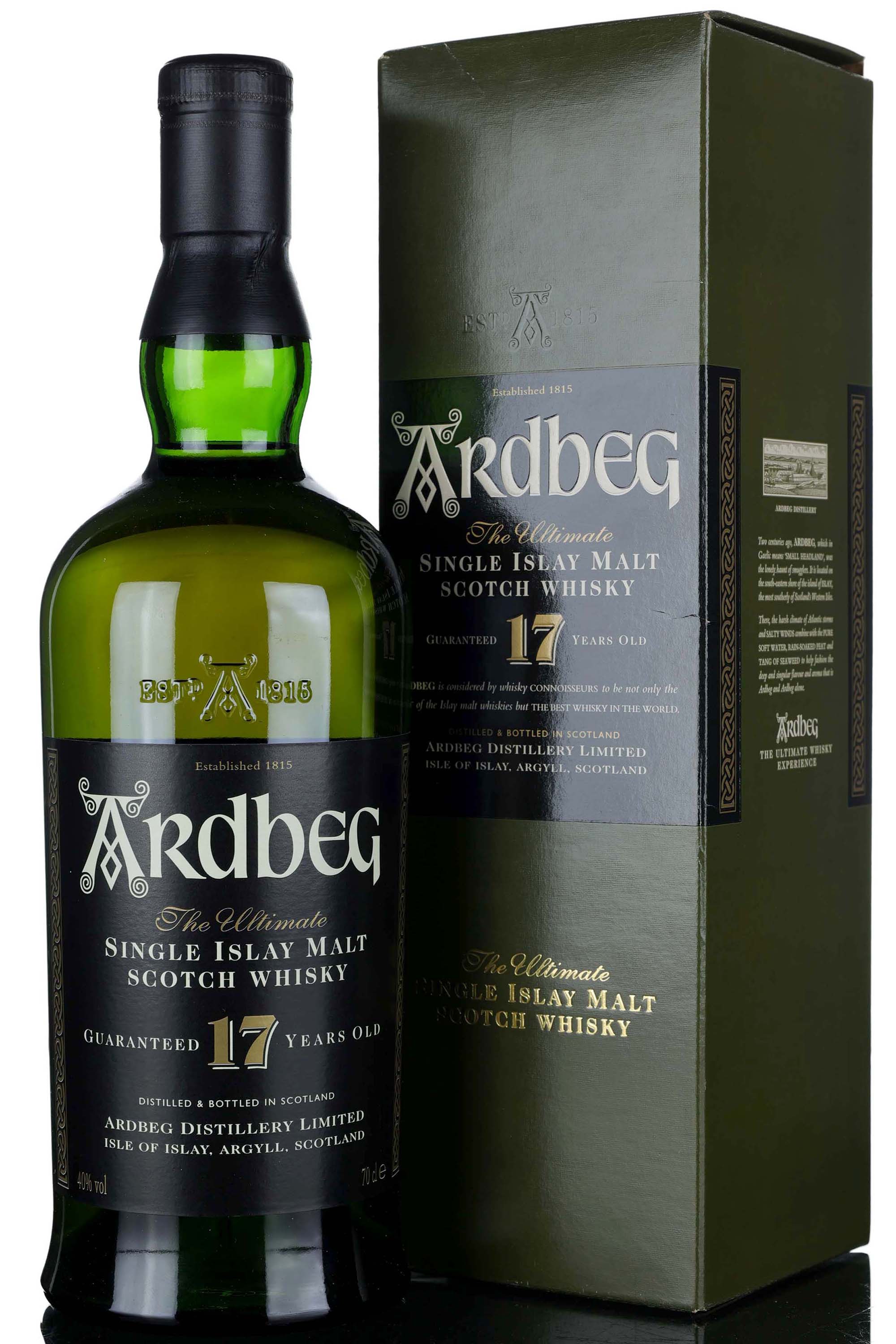
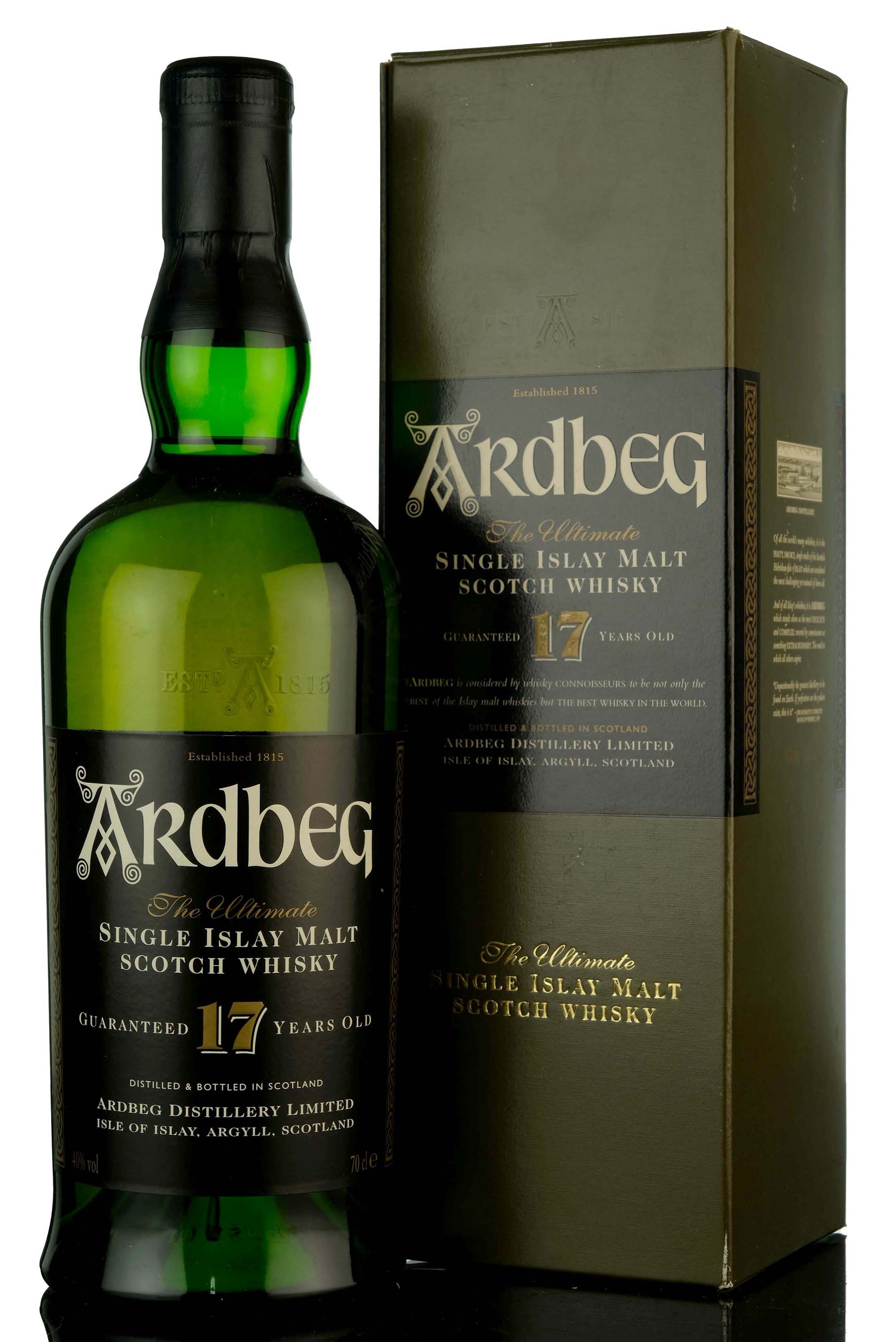
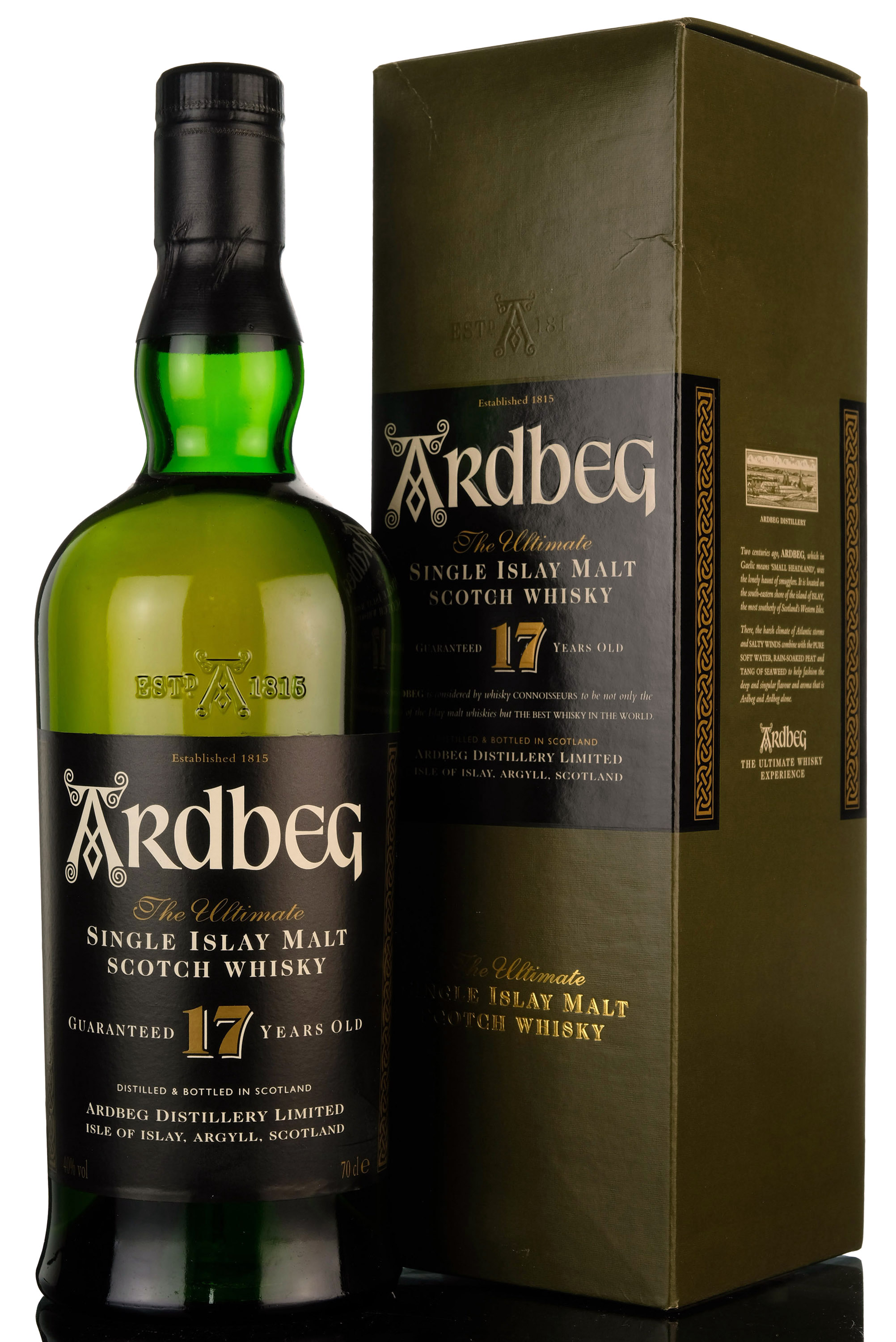
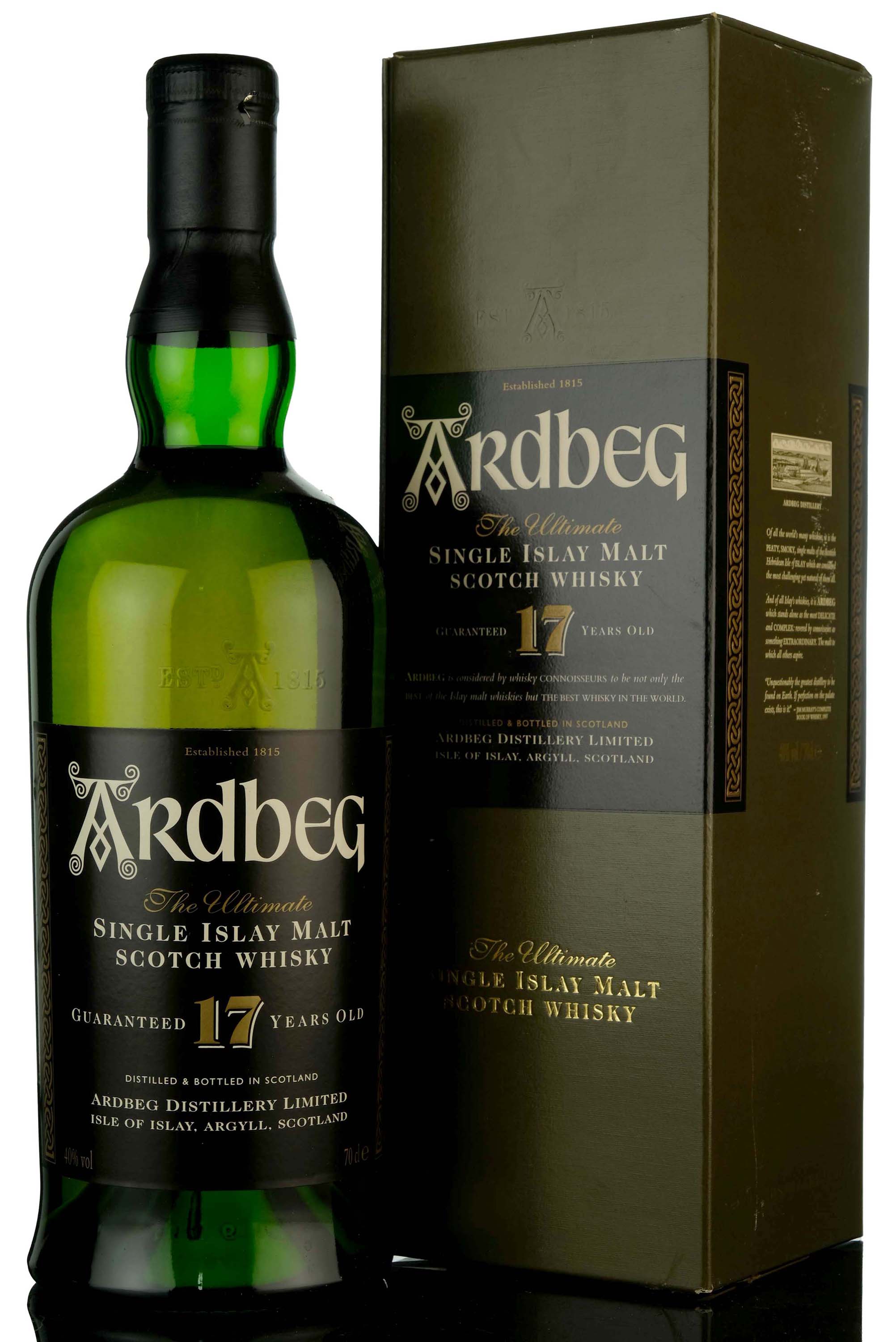
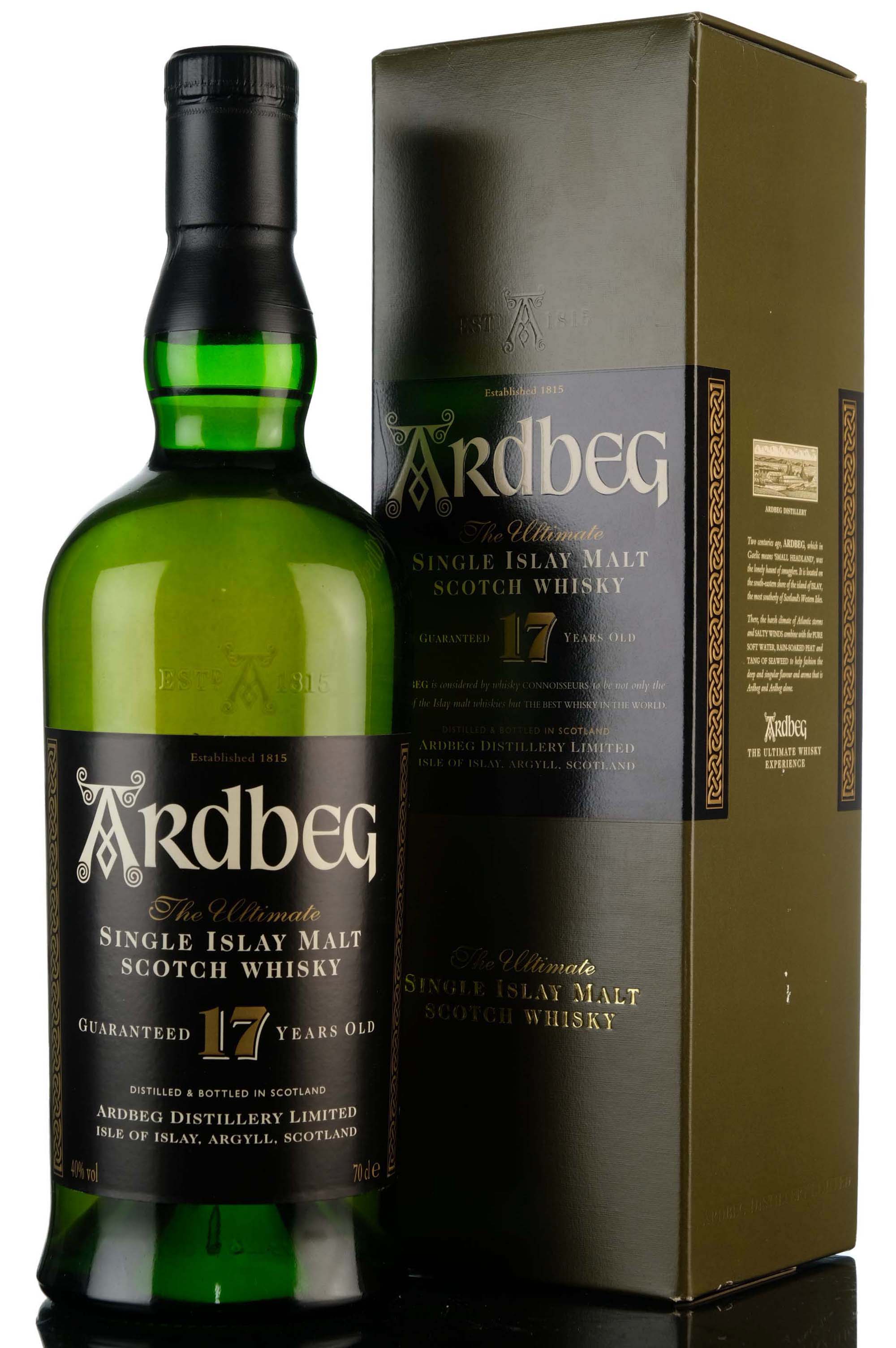
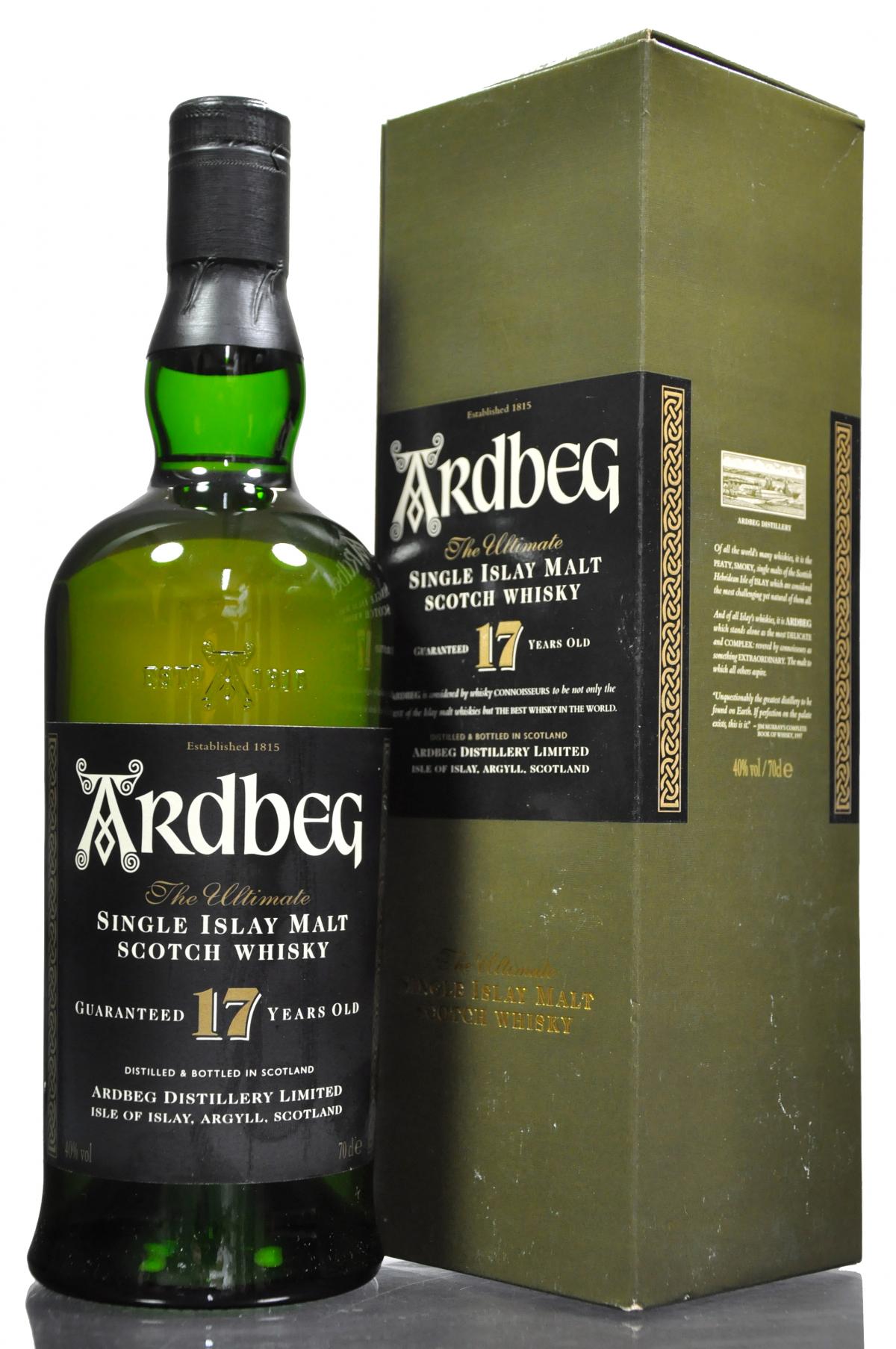
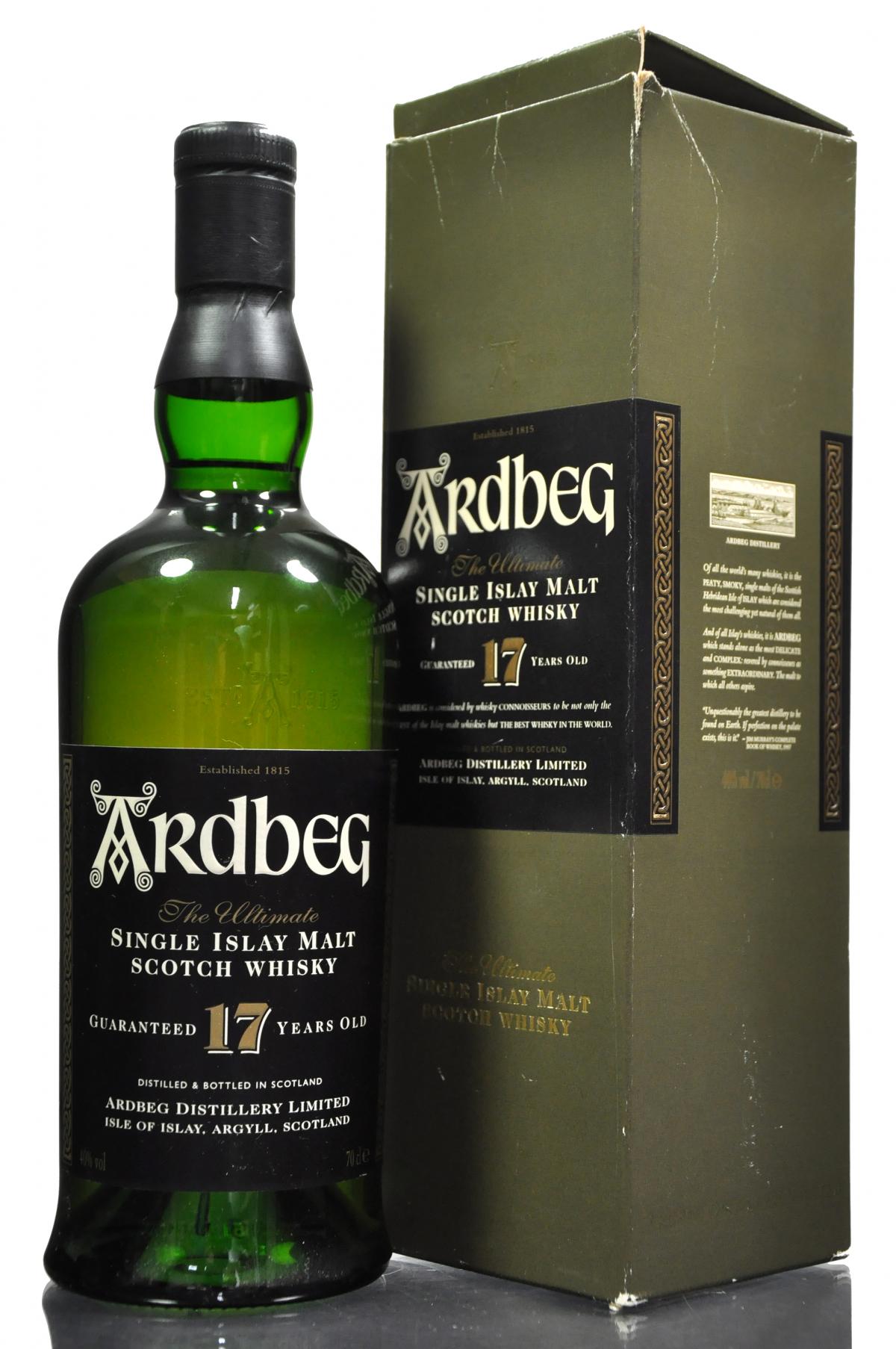
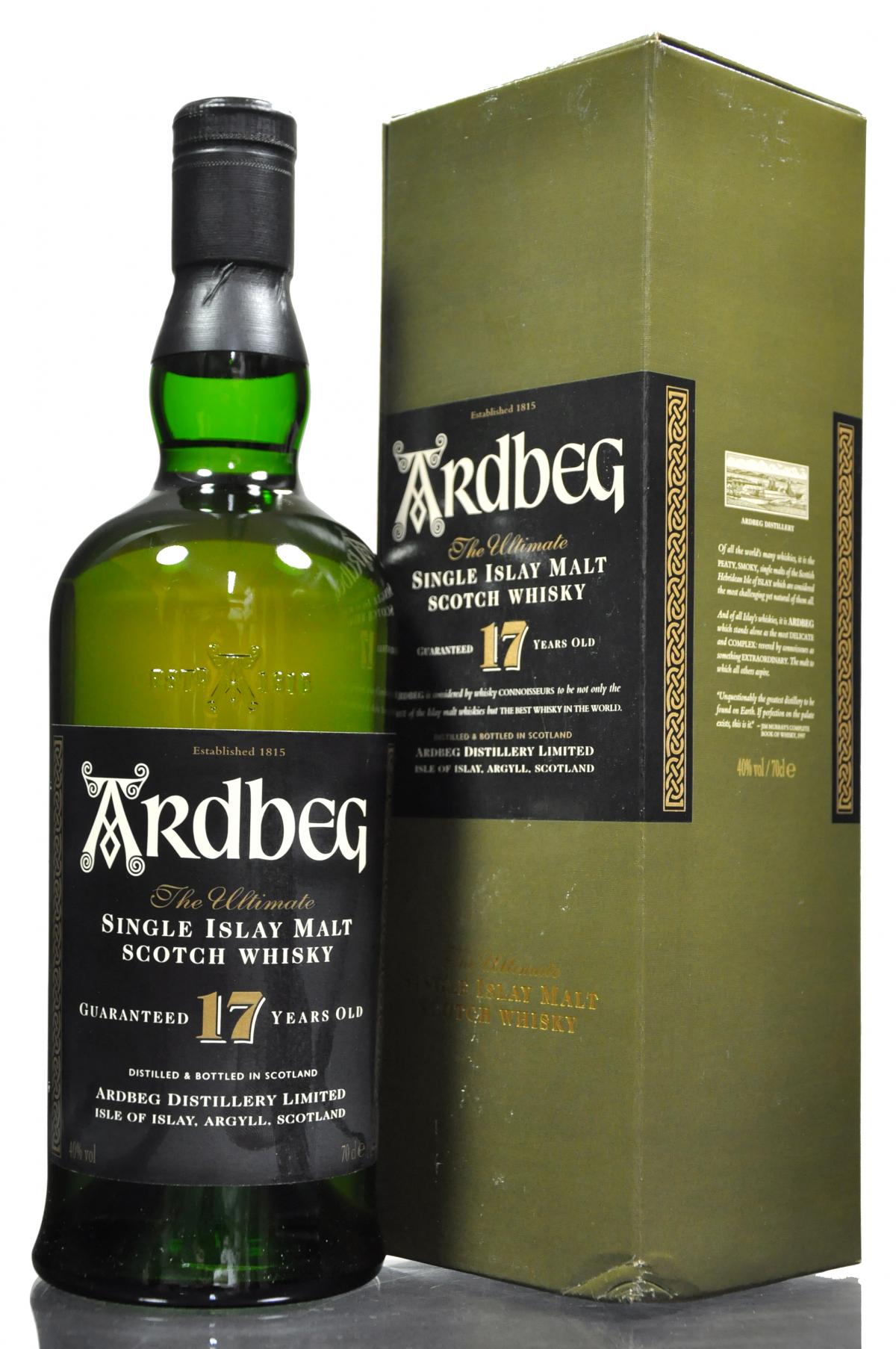
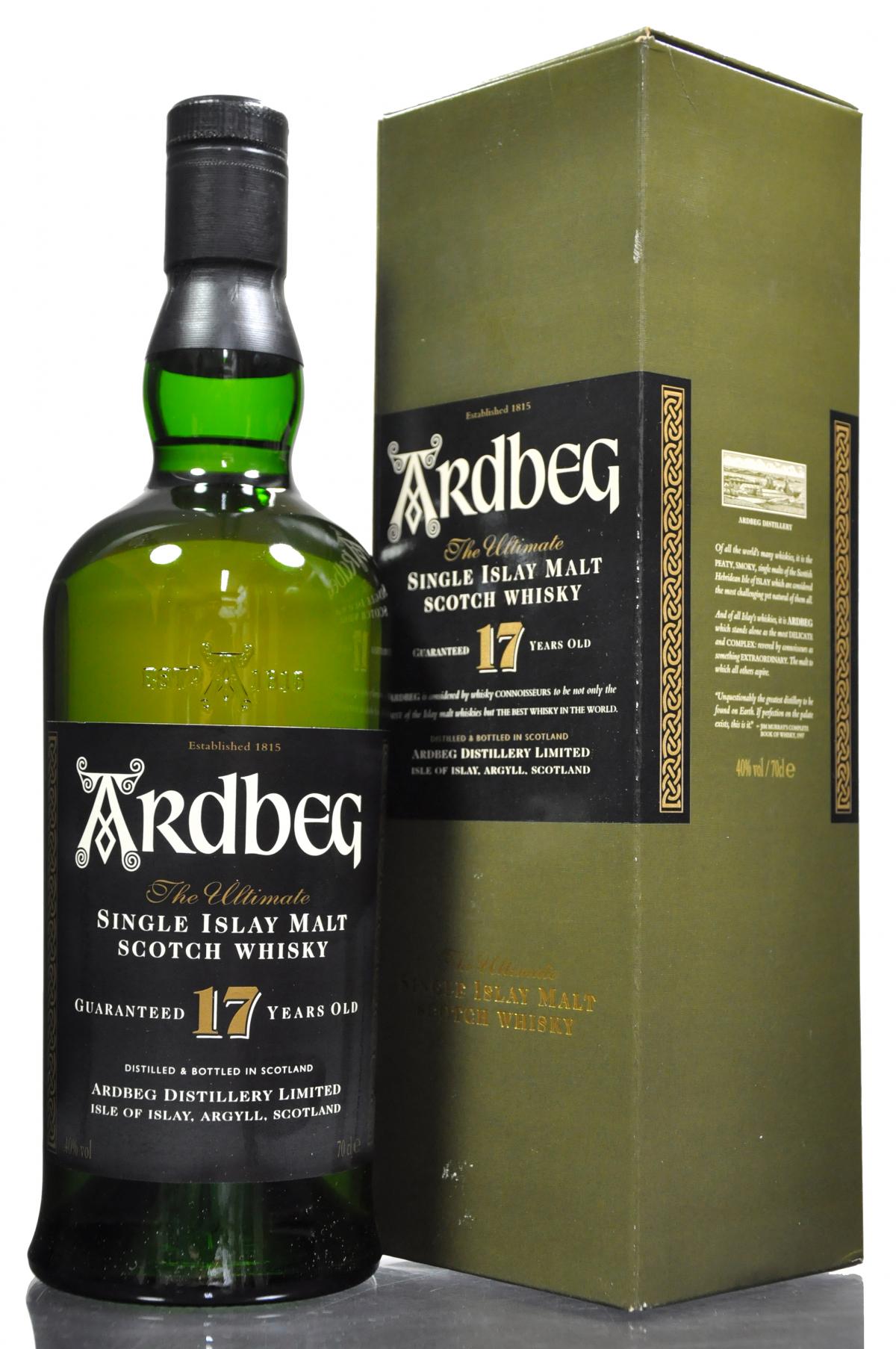
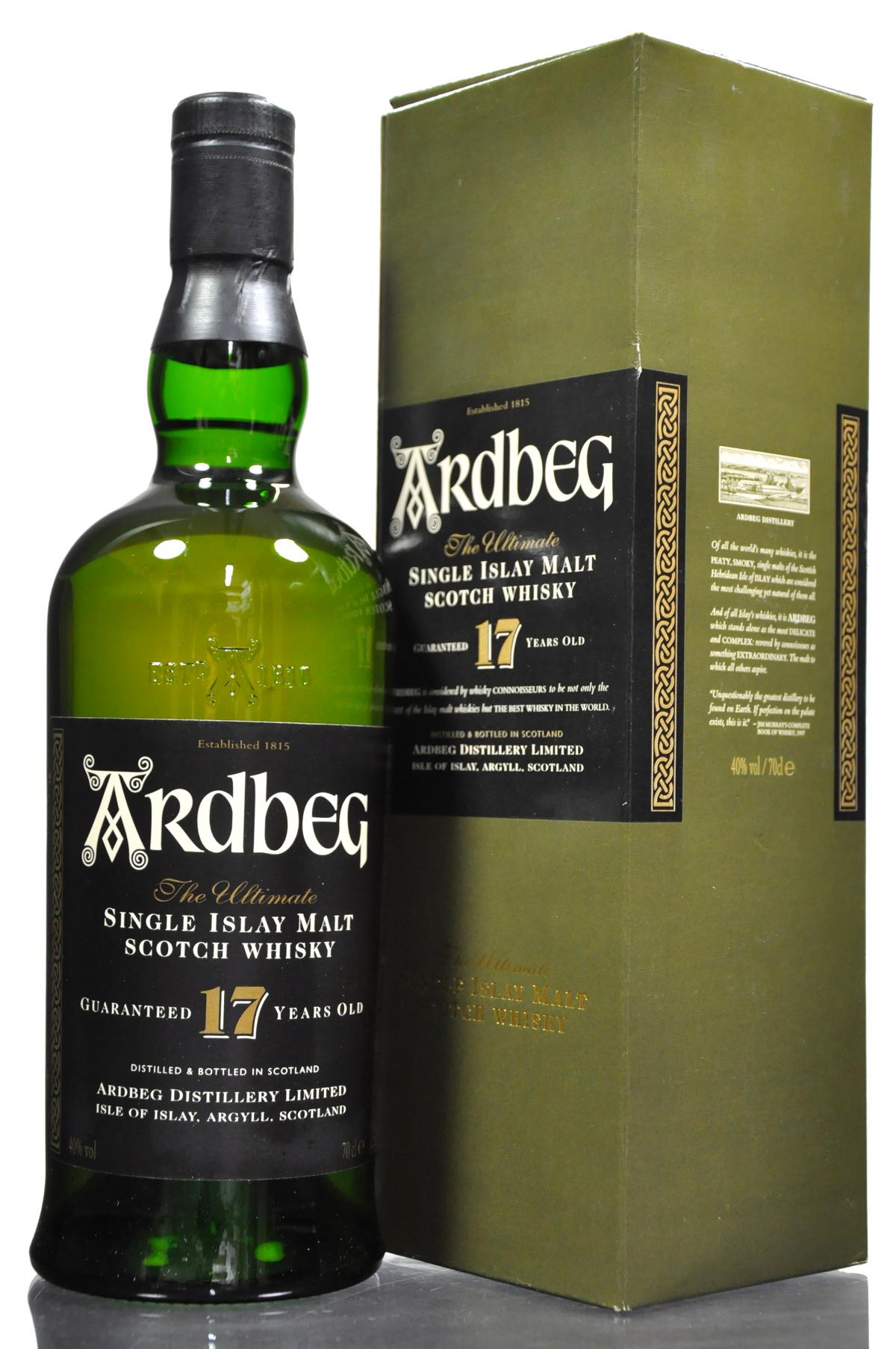
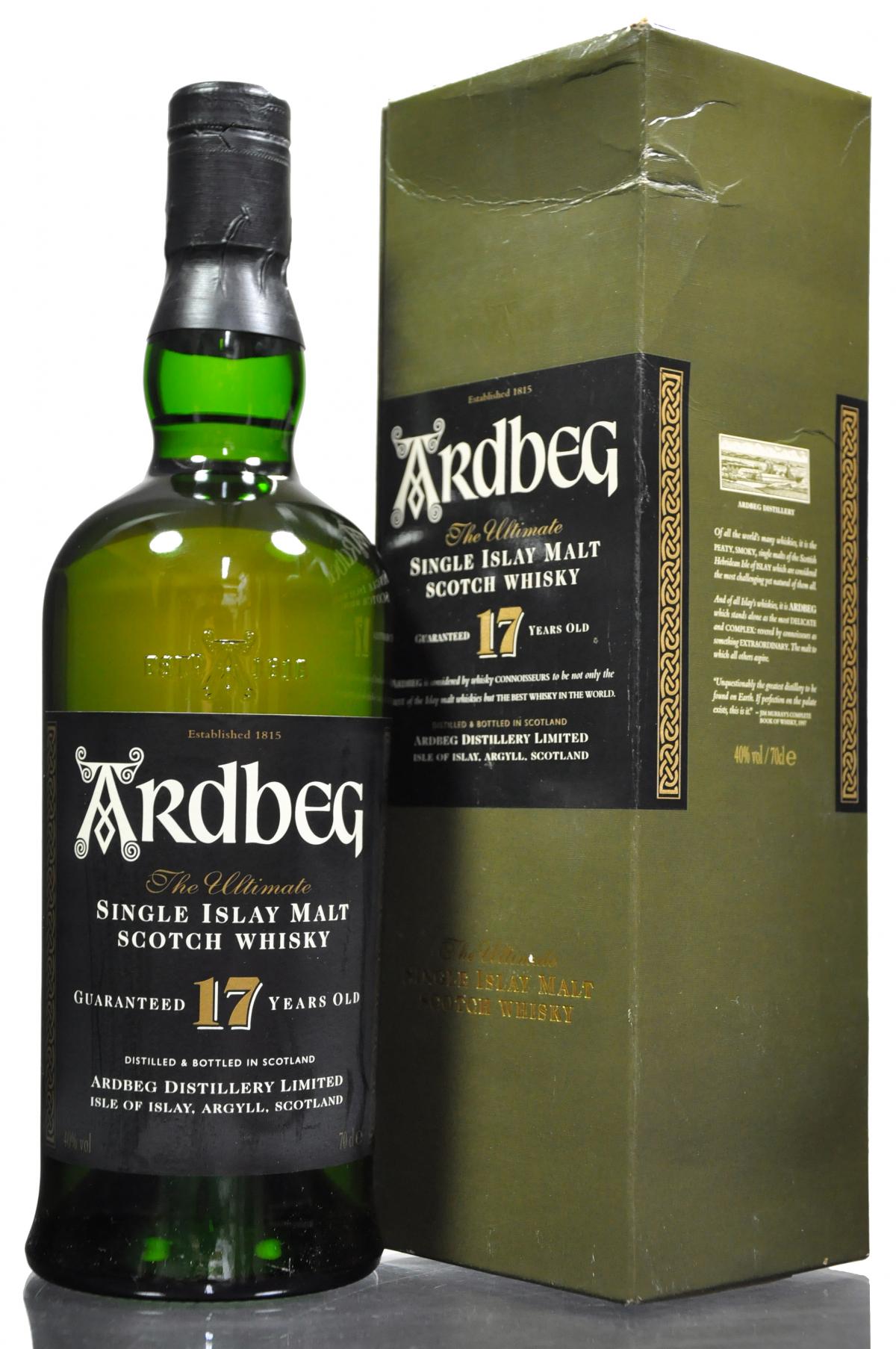
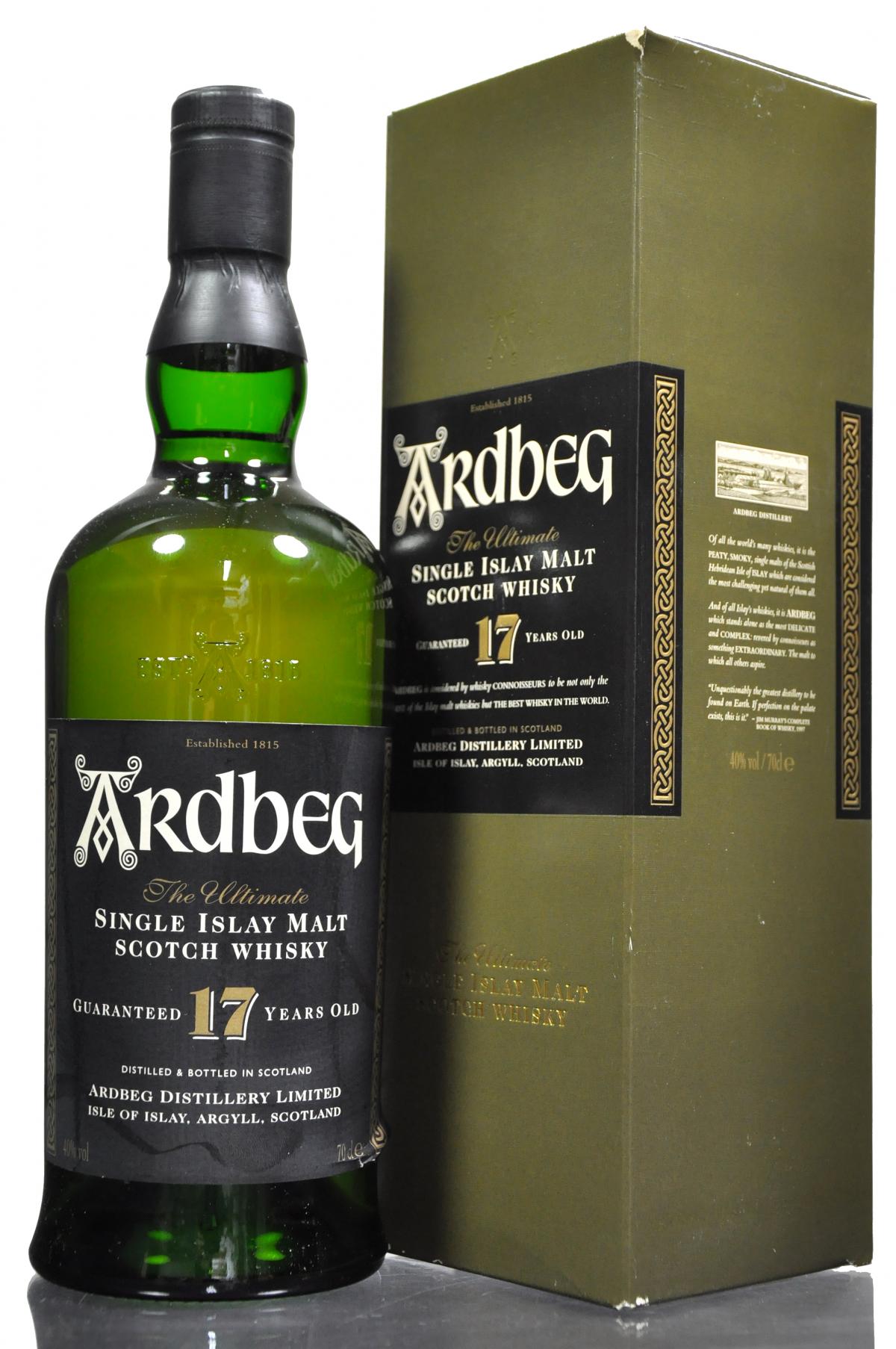
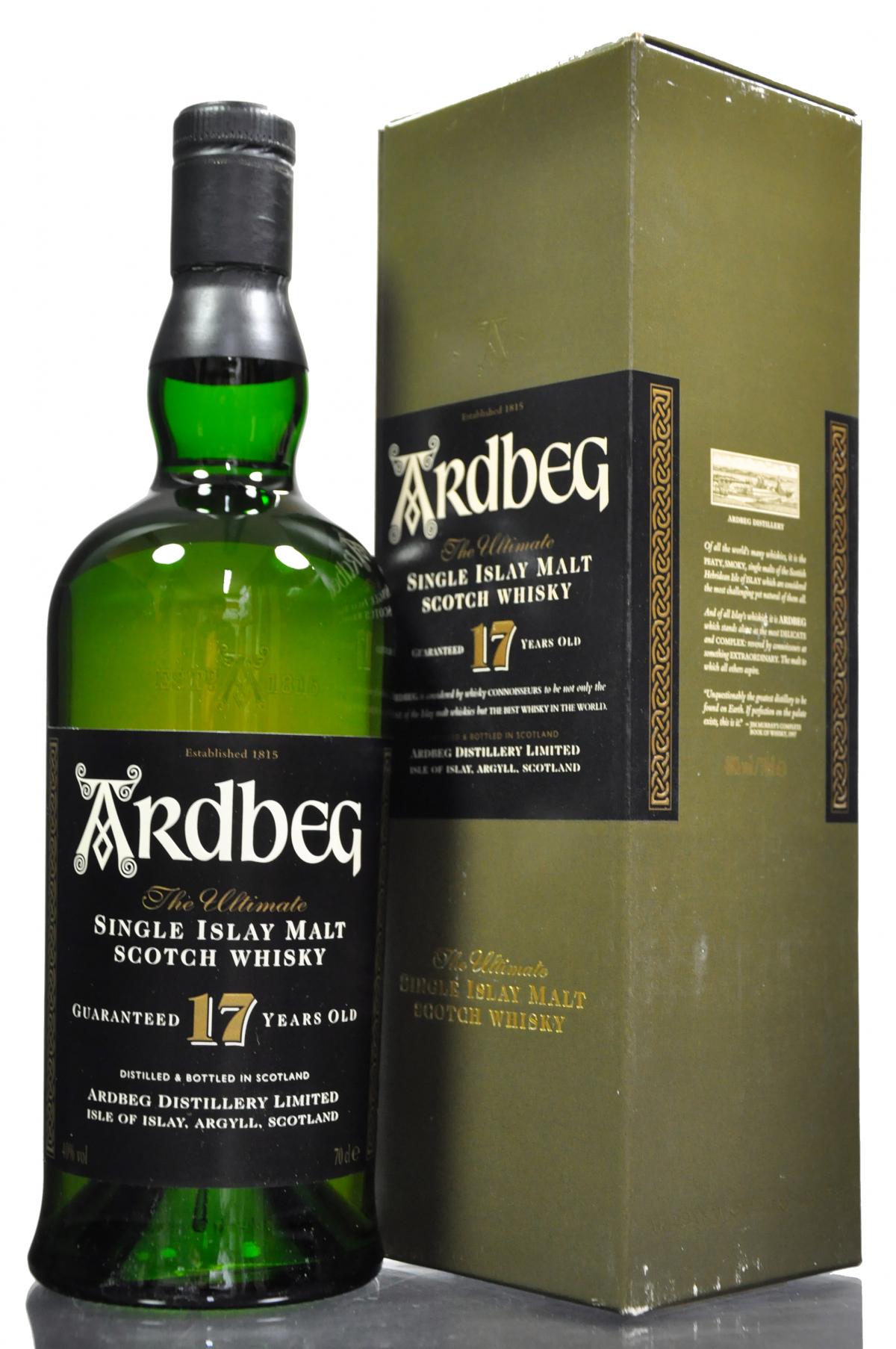
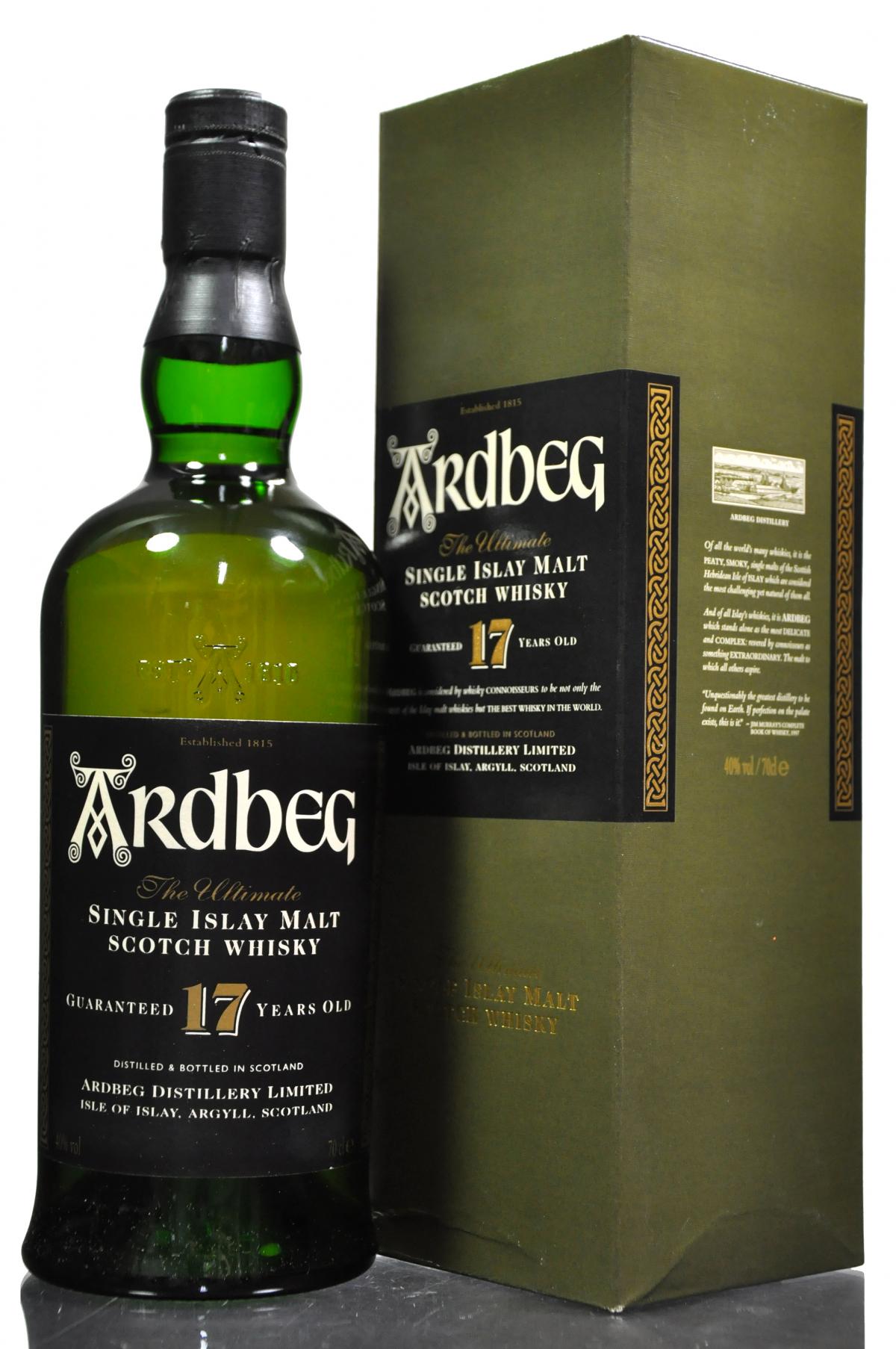
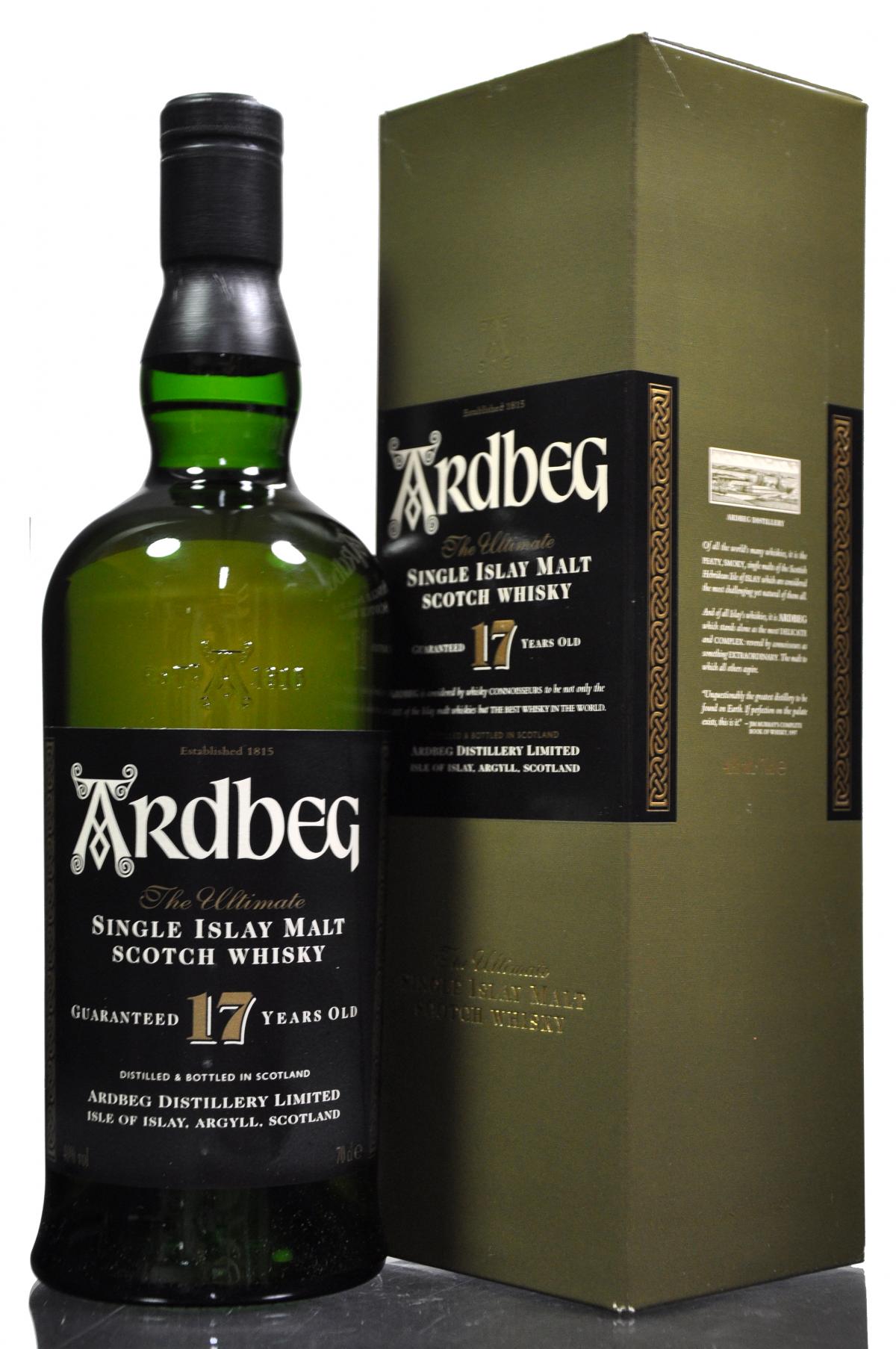
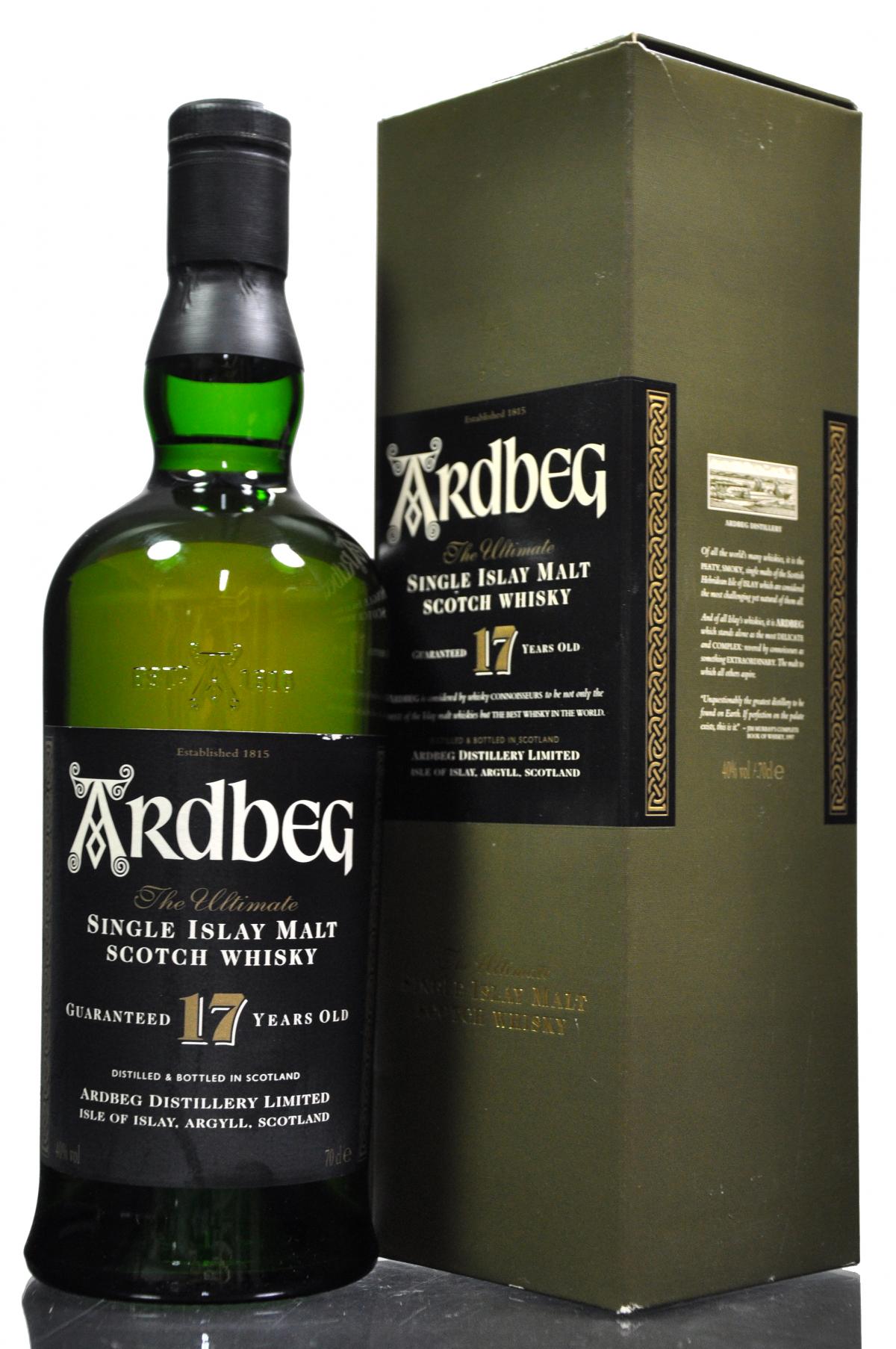
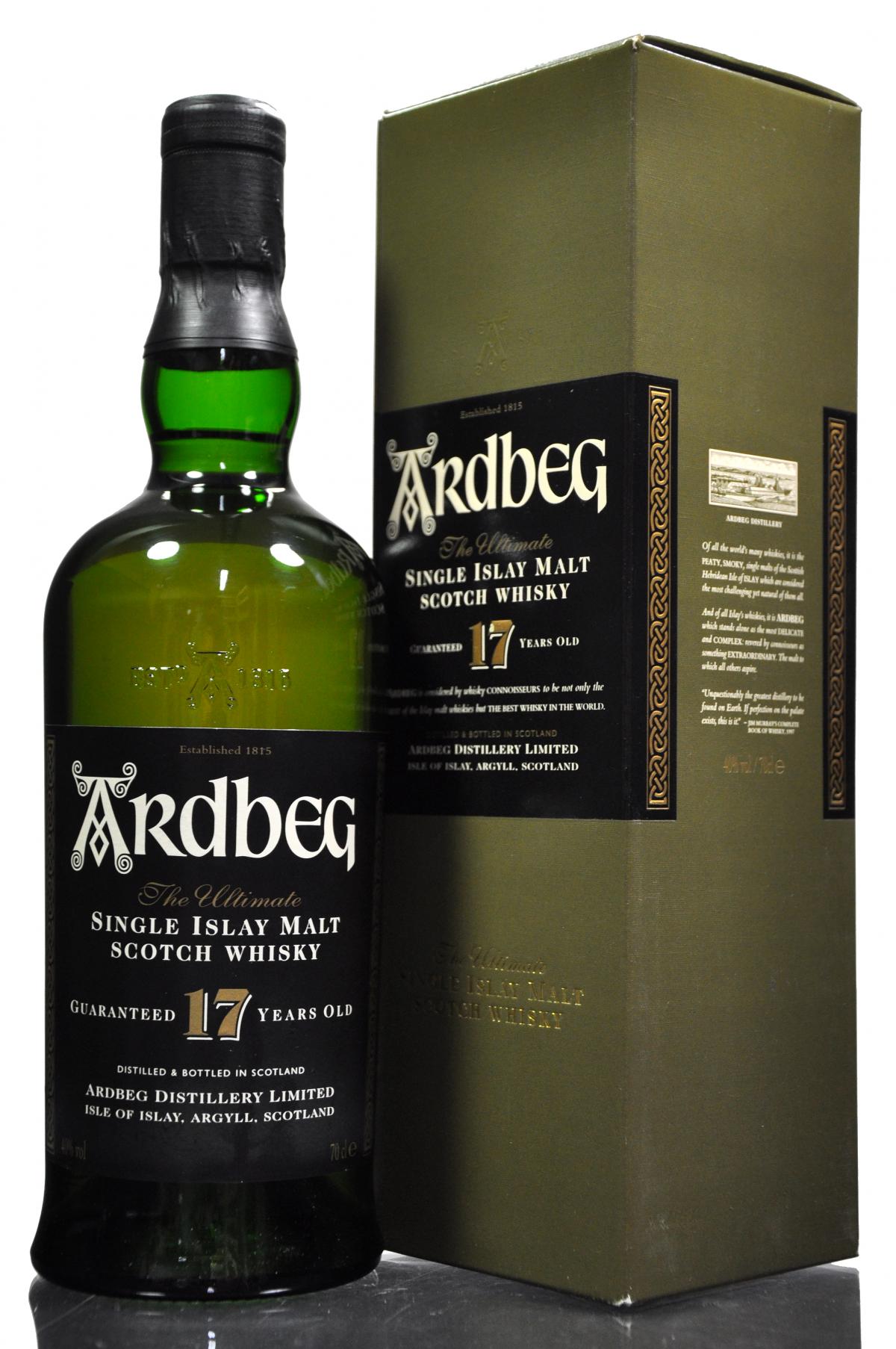
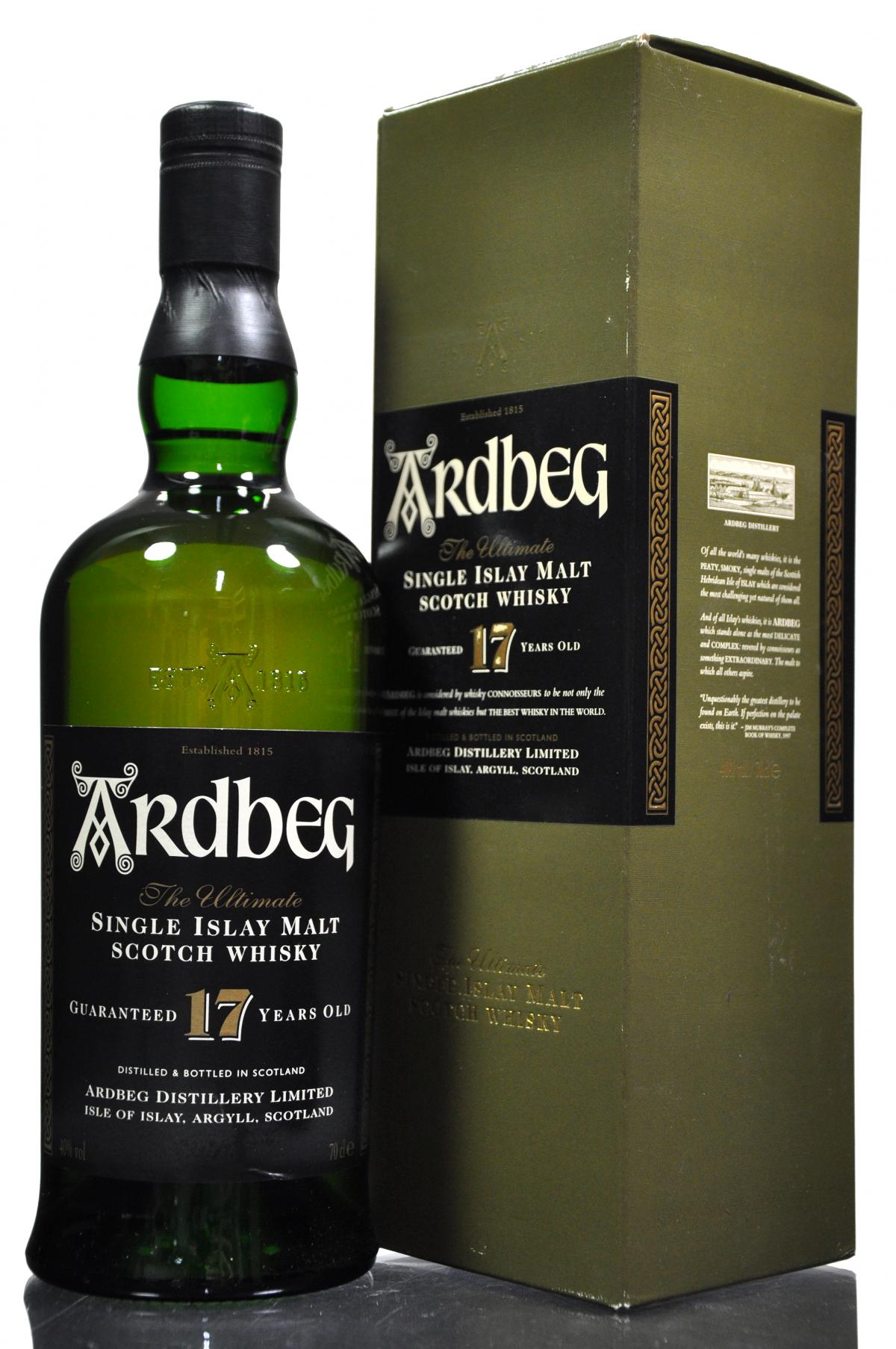
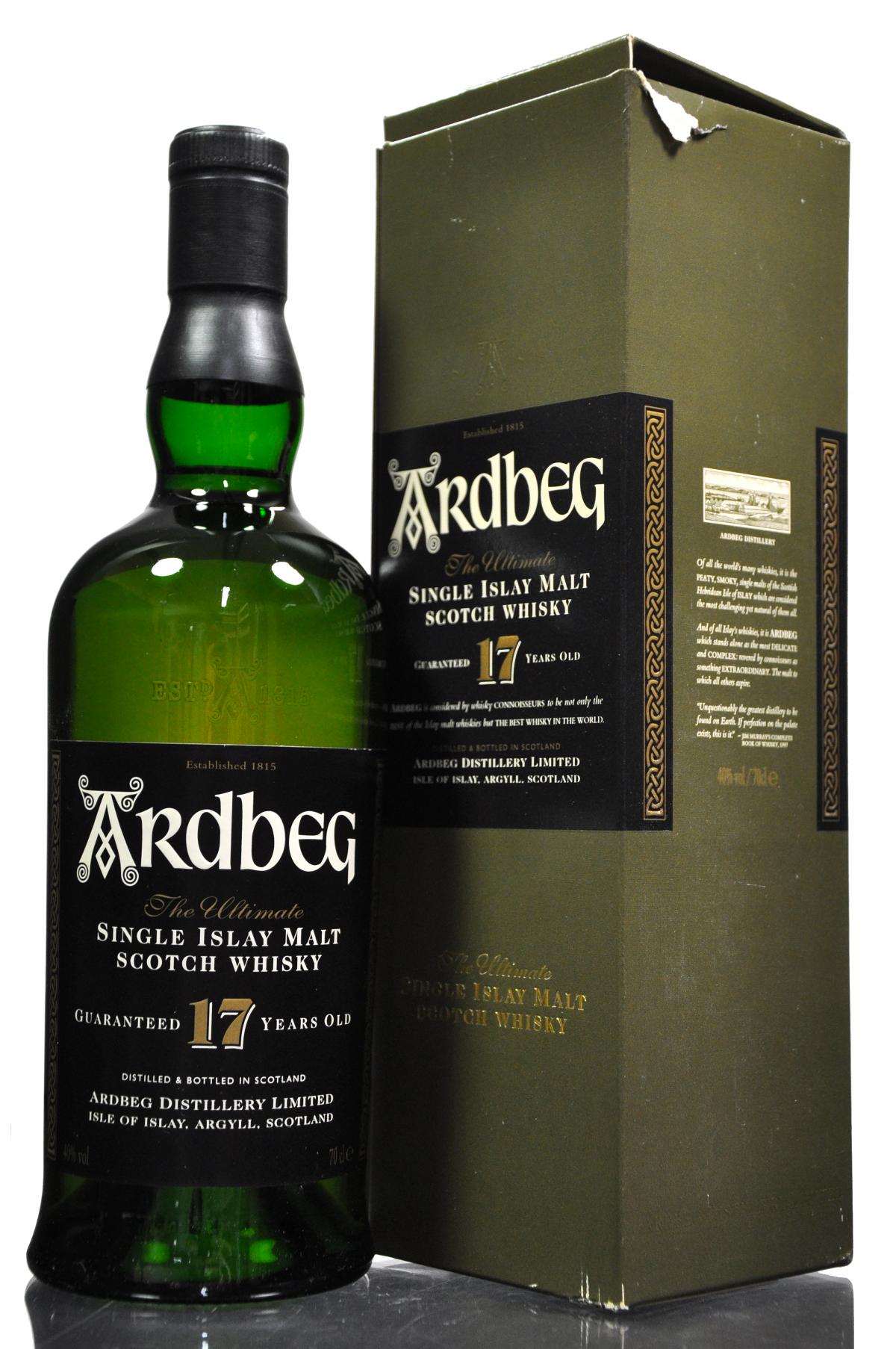
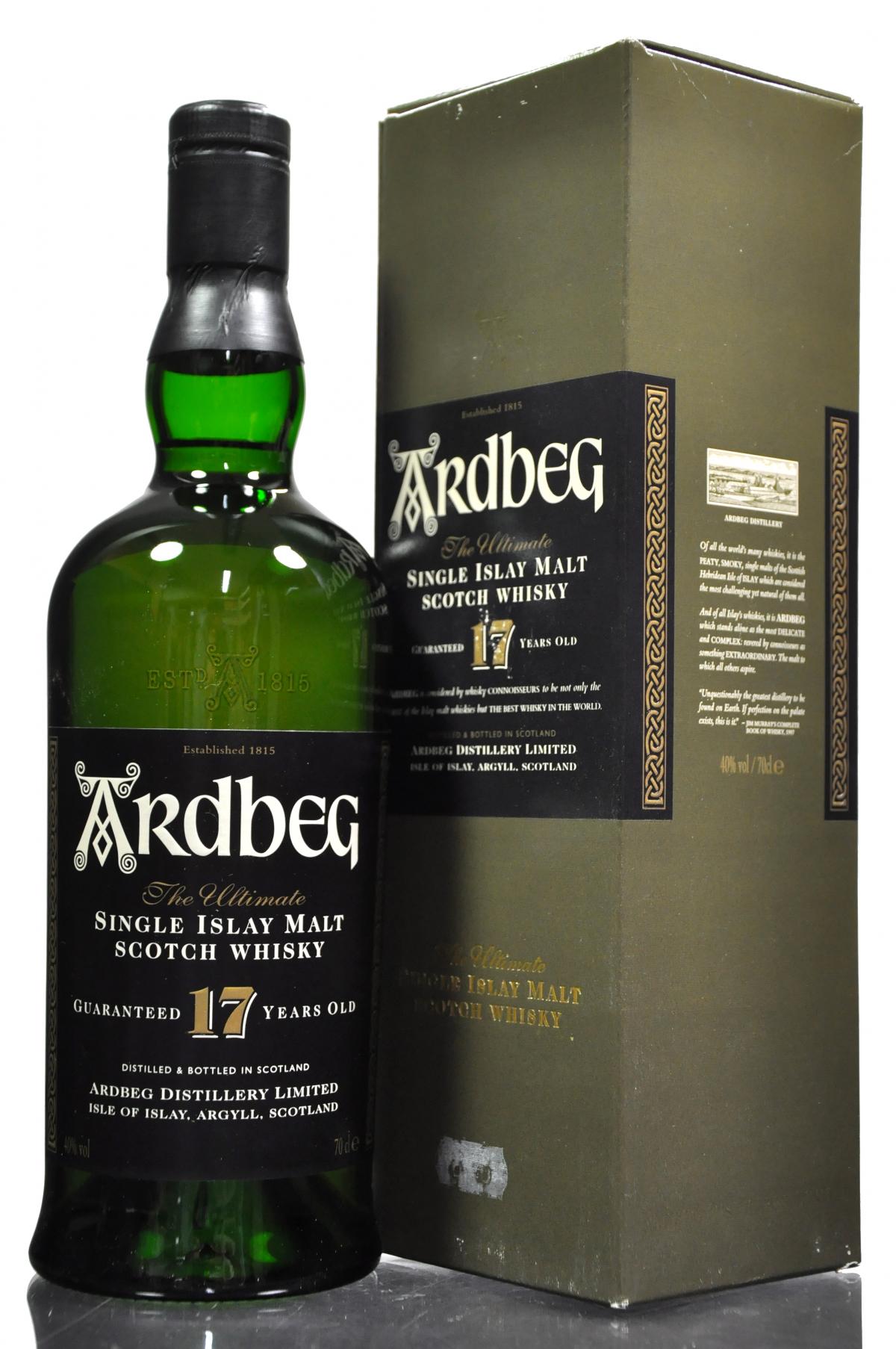
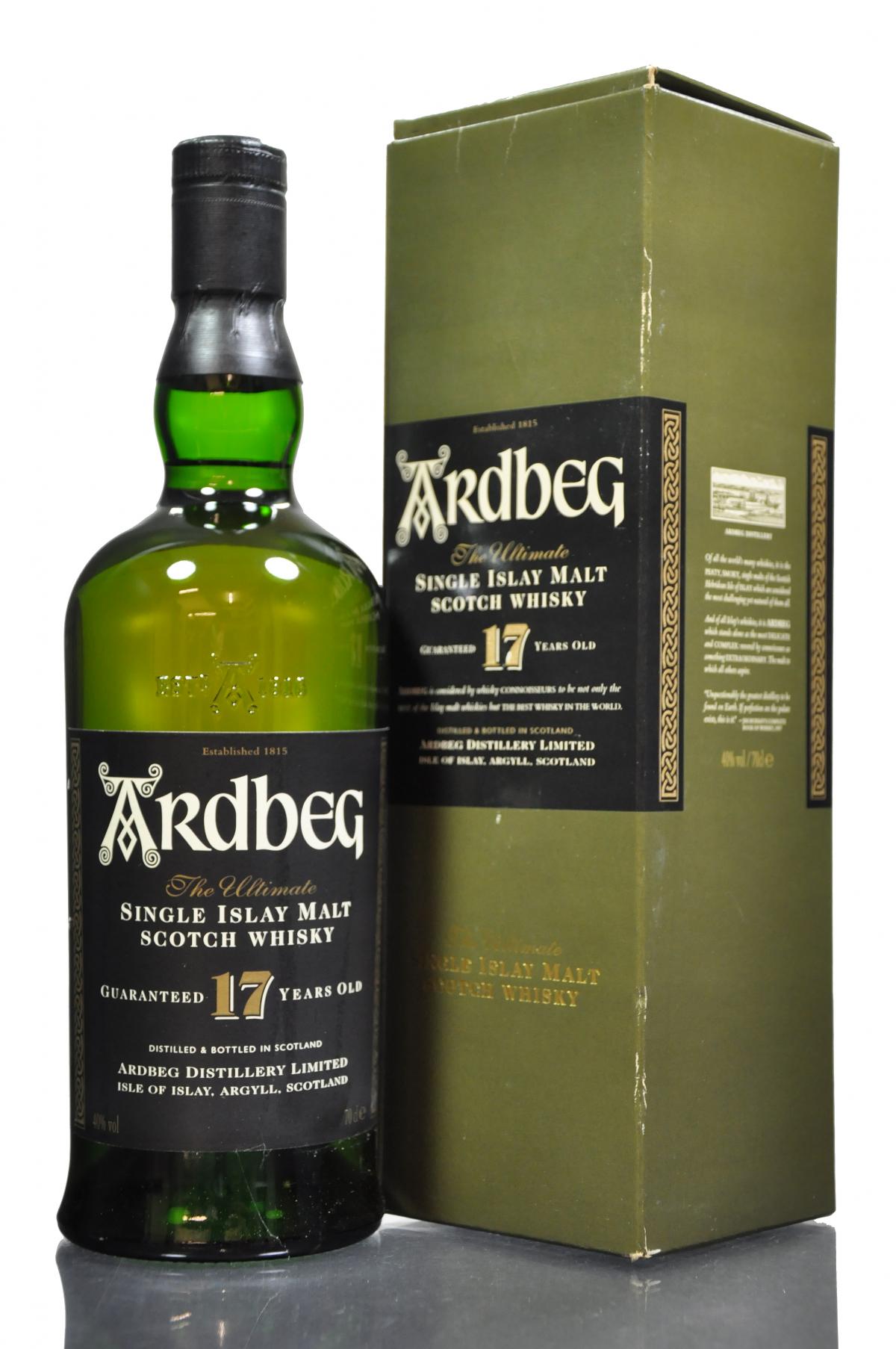
Ardbeg 17 Year Old - Late 1990s
Ardbeg 17 Year Old. Bottled between 1997 and 2004. 70cl. 40%.
An early edition of Ardbeg 17 Year Old, one of the most important official bottlings from the distillery's modern era.
First released in 1997, shortly after Glenmorangie plc acquired Ardbeg, the 17 Year Old was initially assembled from stocks distilled before the distillery was mothballed in 1981. With Ardbeg having produced very little whisky during the 1980s and early 1990s, mature stocks were limited, making 17 years old an unusually high age for what became the distillery's core bottling.
The quality and popularity of the Ardbeg 17 Year Old played an important role in rebuilding the distillery's reputation following its acquisition and reopening. The 17 Year Old remained part of the range until it was discontinued in 2004, by which time younger stocks from the restarted distillery were becoming available and the 10 Year Old had taken its place as Ardbeg's core expression.
This example is an early presentation of the 17 Year Old, featuring the original black and olive-green label design and bottled at 40% ABV.
Founded in 1815, Ardbeg is one of Islay’s iconic distilleries. Ardbeg was purchased by Diageo forerunners DCL and Hiram Walker in 1973, with Walker taking full control in 1977, the year the distillery’s maltings were closed. Ardbeg was mothballed for most of the 1980s; production began again in 1989 under new owners Allied Lyons, but only for two months a year until 1996 when the distillery closed again. In 1997 the dilapidated Ardbeg distillery was bought by Glenmorangie plc (now part of LVMH) and its fortunes turned. Ardbeg was restored and relaunched, kickstarting the craze for heavily peated single malt whisky.
Ardbeg was seldom commercially available before the Allied/DCL takeover - the old white label official bottlings are now very rare. Allied bottled a handful of black label Ardbegs in the 1990s including the popular Ardbeg 30-year-old. The breakthrough bottlings were the Ardbeg 17-year-old and Ardbeg 1974 Provenance released by Glenmorangie in 1997 - these were soon followed by numerous magnificent single casks from 1970s vintages that cemented Ardbeg’s reputation. Independent Ardbeg is uncommon nowadays.
Distillery bottlings are, as the name suggests, bottled by or for the distillery from which the whisky has originated and are thus often referred to as Official Bottlings or OBs. Distillery bottlings are generally more desirable for collectors and usually fetch higher prices at auction than independent bottlings. They are officially-endorsed versions of the whisky from a particular distillery and are therefore considered the truest expression of the distillery’s character.
This ideal of the distillery character is regarded so seriously by the distilleries and brand owners that casks of whisky that are considered to vary too far from the archetype are frequently sold on to whisky brokers and independent bottlers. When this happens, it is often with the proviso that the distillery’s name is not allowed to be used when the cask is bottled for fear of diminishing or damaging the distillery’s character and status.